

In the realm of software architecture, the Flux architecture has emerged as a powerful pattern for managing application state, particularly in large - scale JavaScript applications. At the heart of the Flux architecture lies the Reducer, a crucial component that plays a fundamental role in maintaining and updating the application's state in a predictable and efficient manner. As a Reducer supplier, I am well - versed in the significance of Reducers and their impact on the overall performance of Flux - based applications.
Understanding the Flux Architecture
Before delving into the role of a Reducer, it is essential to have a basic understanding of the Flux architecture. Flux is a unidirectional data flow architecture introduced by Facebook to address the challenges of managing state in complex web applications. It consists of four main parts: the Dispatcher, the Stores, the Views, and the Actions.
The Actions are payloads of information that send data from the application to the Dispatcher. The Dispatcher is a central hub that receives all Actions and broadcasts them to the Stores. The Stores hold the application's state and logic, and they respond to the Actions dispatched by the Dispatcher. Finally, the Views are responsible for rendering the UI based on the state stored in the Stores.
The Role of a Reducer in Flux
A Reducer is a pure function that takes the current state and an Action as input and returns a new state. In the context of the Flux architecture, Reducers are used to manage the state within the Stores. They are the key to making the state management predictable, as they follow a set of rules that ensure the same input will always produce the same output.
1. State Immutability
One of the most important aspects of a Reducer is that it enforces state immutability. Instead of modifying the existing state directly, a Reducer creates a new state object that reflects the changes described by the Action. This immutability has several benefits. Firstly, it makes it easier to track changes in the state over time, as each new state is a distinct object. Secondly, it simplifies debugging, as it becomes clear when and how the state has changed.
For example, consider a simple shopping cart application. When a user adds an item to the cart, the Reducer will create a new cart state with the added item, rather than modifying the existing cart state. This way, if there are any issues with the state, it is straightforward to trace back to the point where the new state was created.
2. Predictable State Updates
Since Reducers are pure functions, they are highly predictable. Given the same initial state and the same Action, a Reducer will always return the same new state. This predictability is crucial for testing and debugging. Developers can easily write unit tests for Reducers, ensuring that they behave as expected under different conditions.
For instance, if an Action is dispatched to increase the quantity of an item in the shopping cart, the Reducer will always calculate the new quantity in the same way. This makes it easy to verify the correctness of the Reducer's behavior.
3. Centralized State Logic
Reducers centralize the logic for updating the state. All state - related operations are defined within the Reducer functions, which makes the codebase more organized and easier to maintain. Instead of having state - changing logic scattered throughout the application, it is all contained in one place.

In a large - scale application, this centralization can significantly improve the development process. Developers can quickly find and modify the state - updating logic when needed, without having to search through multiple files.
Types of Reducers and Their Applications
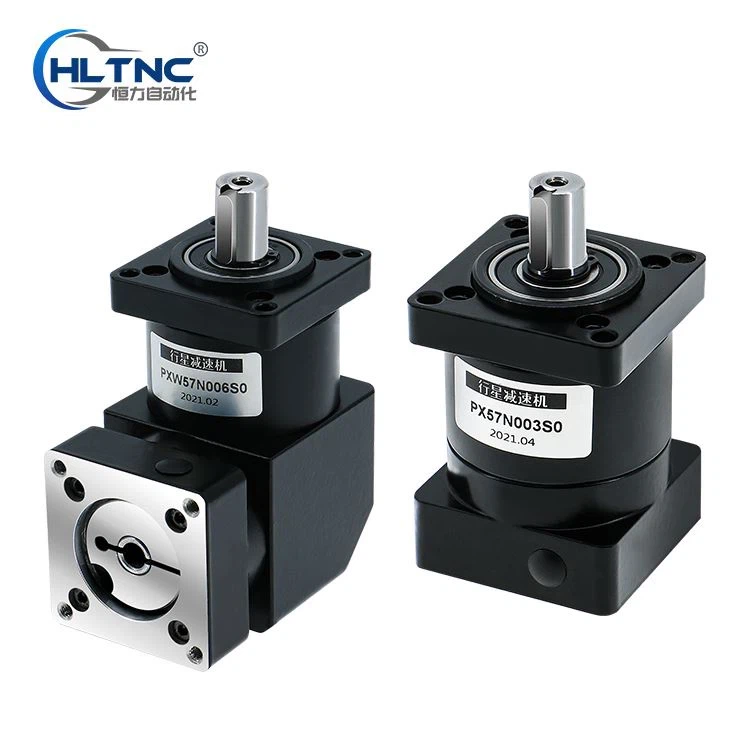
As a Reducer supplier, I offer a variety of Reducers to meet different application requirements. Just as in mechanical engineering where there are different types of gearboxes like Nema 34 Reduction Gearbox, Double Reduction Worm Gearbox, and Nema 23 Planetary Gearbox for different mechanical tasks, in the software world, different types of Reducers serve different purposes.
1. Root Reducer
The Root Reducer is the top - level Reducer in a Flux application. It combines multiple smaller Reducers into a single Reducer that can manage the entire application state. This is similar to how a complex mechanical system might combine multiple gearboxes to achieve the desired output.
The Root Reducer takes the overall state of the application and an Action, and it delegates the state - updating task to the appropriate sub - Reducers. This modular approach makes the application more scalable and easier to manage.
2. Sub - Reducers
Sub - Reducers are responsible for managing specific parts of the application state. For example, in a social media application, there might be a sub - Reducer for managing the user's profile information, another for managing the news feed, and yet another for managing the list of friends.
Each sub - Reducer focuses on a particular aspect of the state, which makes the code more modular and easier to understand. It also allows different developers to work on different parts of the state management logic independently.
Advantages of Using Our Reducers
As a Reducer supplier, I take pride in offering high - quality Reducers that provide several advantages to developers.
1. Performance Optimization
Our Reducers are designed to be highly efficient. They are optimized to handle large - scale applications with complex state management requirements. By using our Reducers, developers can ensure that their applications run smoothly, even under heavy loads.
2. Ease of Integration
Our Reducers are easy to integrate into existing Flux - based applications. They follow industry - standard practices, which means that developers can quickly incorporate them into their projects without having to make significant changes to their existing codebase.
3. Comprehensive Support
We offer comprehensive support to our customers. Whether it's answering technical questions, providing documentation, or assisting with debugging, our team of experts is always ready to help. This support ensures that developers can make the most of our Reducers and overcome any challenges they might face.
Conclusion
In conclusion, the Reducer plays a vital role in the Flux architecture. It enforces state immutability, provides predictable state updates, and centralizes state - related logic. As a Reducer supplier, I am committed to providing high - quality Reducers that meet the diverse needs of developers. Whether you are working on a small - scale application or a large - scale enterprise project, our Reducers can help you manage your application state more effectively.
If you are interested in learning more about our Reducers or would like to discuss your specific requirements, I encourage you to reach out. We are always open to new partnerships and are eager to help you build better, more efficient applications.
References
- Facebook Open Source. (n.d.). Flux: An Application Architecture for React. Retrieved from https://facebook.github.io/flux/
- Redux Documentation. (n.d.). Reducers. Retrieved from https://redux.js.org/tutorials/fundamentals/part - 3 - state - actions - reducers


