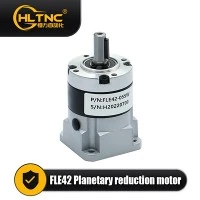
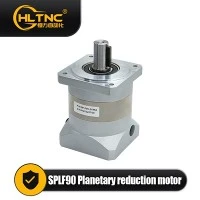
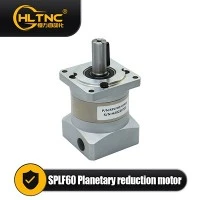
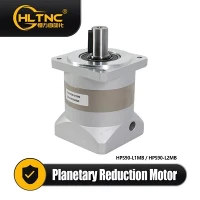
Reducer

What is Reducer?


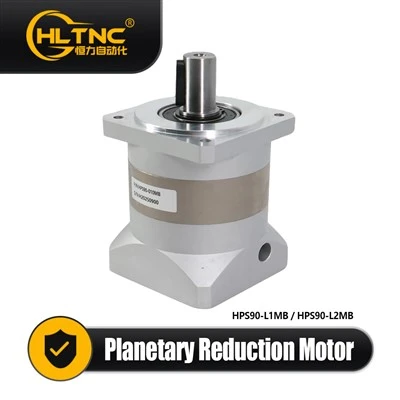
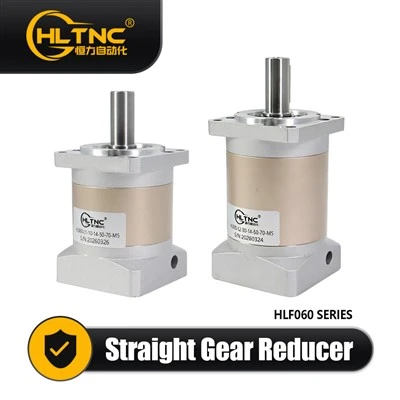
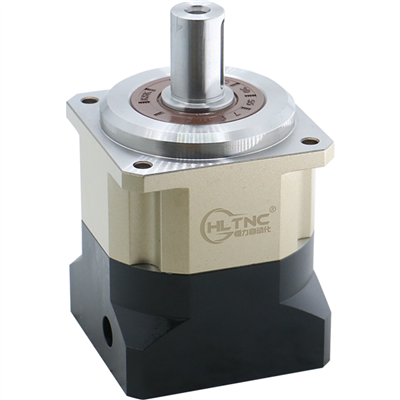
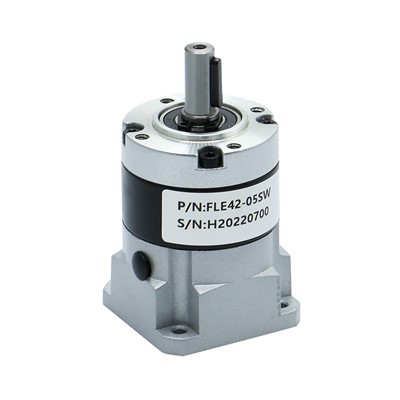
A gear reducer is a mechanical system of gears in an arrangement such that input speed can be lowered to a slower output speed but have the same or more output torque. The use of a gear reducer occurs when the drive gear is smaller and has fewer teeth than the driven gear.

Advantages of Reducer

Torque multiplication

For devices that require rapid acceleration, the importance of torque can’t be overstated. To achieve this, gear reducers are one of the best options, as they can exponentially increase torque based on the number of gears in the system and the number of teeth in each of these gears.

Speed reduction

In many gear reducers, the increase in torque is inversely proportional to the speed. Thus, in systems where there is a requirement for rapid speed reduction, these devices can turn out to be extremely useful. Just like the increase in torque, the decrease in output speed can also be determined using the reduction ratio.

Inertia reduction

In order to deal with size constraints, many motors are designed to generate more torque than is acceptable for their frame size. As a result, the load inertia might increase significantly, leading to an increase in settling time for a motor, consequently reducing its efficiency. This inertial mismatch can be easily handled by a gear reducer.

Economical

In order to achieve high torque, low speeds, and an increased capability to handle inertial loads, manufacturers require significantly large motors, which are difficult and expensive to make. Conversely, gear reducers can achieve all these goals with a much smaller motor, thereby driving down the cost of production.

 
Why Choose Us

Quality control:

We have professional personnel to monitor the production process, inspect the products and ensure that the final product meets the required quality level standards, guidelines and specifications.

High quality:

Our products are manufactured or executed to very high standards, using the finest materials and manufacturing processes.

One stop solution:

From the begining inquiry and throughout the entire process until you receive the goods. we are dedicated to supporting you every step of the way.

24h online service:

We try and respond to all concerns within 24 hours and our teams are always at your disposal in case of any emergencies.

Types of Reducer
 
Linear Block
 

Single reduction gearbox

The single reduction gearbox features only one set of gears. It incorporates ports for the propeller shaft and motor shaft to enter the assembly. A small gear, known as the pinion, is driven by the drive motor shaft. As the pinion receives power from the drive motor, it further drives the large gear, directly coupled to the propeller shaft. Typically, the large gear has double the size of the pinion.


Double reduction gearbox

Used in high-speed conditions, the double reduction gearbox has a pinion on the input shaft connected to the first gear. The first gear is then linked to another shaft with the low-speed pinion. This pinion is fixed to the second deceleration section, directly linked to the drive shaft, achieving a speed reduction of up to a 20:1 ratio.

Laser Chiller
CNC Gear Box
 

Magnetic speed reducer

The magnetic speed reducer, an unconventional alternative to traditional reducers, utilises magnetic attraction force instead of physical contact between rotating parts for speed and torque control. Although less common due to their high weight, low torques, and complex design, these gearboxes require minimal maintenance, as they do not need lubrication and can operate at high temperatures.


Parallel shaft reduction gearbox

Comprising multiple gear assemblies, the parallel shaft reduction gearbox enhances reduction capacity. The overall gear reduction ratio is determined by multiplying the ratios of individual gears in each assembly. For example, if the gearbox contains 7:1, 6:1, and 5:1 sections, the overall ratio is 210:1.

Linear Block


Material of Reducer

The reducer can be made of Carbon Steel, Alloy, or Stainless steel and much more. In comparison to the Stainless Steel Reducer, Carbon Steel Reducer possesses high-pressure resistance, higher strength, and wear resistant but this can be easily corroded.

Linear Modules

Application of Reducer


1
productcate-1-1

Textile industry

It is used in the dyeing process to remove excess water from the fabric, which helps in improving the color fastness and reducing the drying time.

2
productcate-1-1

Chemical industry

Reducer is used as a reducing agent in chemical reactions involving metal ions, such as the reduction of copper to copper oxide.

3
productcate-1-1

Paper industry

It is used in the paper pulp production process to reduce the viscosity of the pulp, which allows it to move more freely through the papermaking machinery.

4
productcate-1-1

Oil and gas industry

Reducer is used as a solvent to dissolve substances that are difficult to remove from oil or gas, such as heavy metals.

4th Axis


Principle of Reducer

The working principle of a reduction gearbox is based on the concept of gear ratio. When two gears of different sizes are meshed together, the gear with the larger number of teeth will rotate more slowly than the gear with the smaller number of teeth. The gear ratio is the ratio of the number of teeth on the larger gear to the number of teeth on the smaller gear.

Maintenance of Reducer
 

Lubrication

Proper lubrication is crucial for the smooth running of a reducer. Make sure that the reducer is well-lubricated according to the manufacturer's instructions.

Inspection

Regular inspection should be carried out to identify any signs of wear and tear in the reducer. Inspect the gears, bearings, and shafts for any damage and replace any worn-out parts.

Cleaning

Keep the reducer clean and free from debris, dust, and dirt. Regular cleaning helps to prevent contaminants from damaging the internals of the reducer.

Adequate load

Be sure to operate the reducer only within its load capacity as recommended by the manufacturer. Overloading the reducer can cause damage to the gears and bearings and can shorten its lifespan.

Overheating

Monitor the temperature of the reducer to ensure it does not overheat. Overheating can cause damage to the lubricant, gears, and bearings.

Noise

Listen for any unusual sounds during operation. If there is any unusual noise, investigate the cause and rectify the problem as soon as possible.

How to Choose Reducer
 

Speed and torque requirements
The first consideration when choosing a reducer is the speed and torque requirements of your application. You need to ensure that the reducer you select can handle the speed and torque of your motor and still be within the range of your gearbox.


Mounting and positioning
The reducer should be mounted in a location that allows for easy access to the motor and gearbox. You also need to consider how the reducer will be positioned in relation to other components in your system.


Material and durability
The reducer should be made of a material that is durable and resistant to wear and tear. The material should also be able to withstand the environmental conditions in which the system will be operating.


Compatibility with other components
Make sure that the reducer is compatible with the other components in your system. For example, the reducer should be compatible with the motor, gearbox, and any other components that are part of your system.

How to Install Reducer


Prepare the mounting surface

Before installing the reducer, prepare the mounting surface by cleaning it and making sure it is flat and smooth.


Mount the reducer

Mount the reducer to the mounting surface using the provided hardware. Ensure that it is securely fastened and positioned correctly.


Connect the motor and gearbox

Connect the motor and gearbox to the reducer by using the appropriate shafts and couplings. Ensure that the connections are secure and the shafts are aligned correctly.


Test the installation

Once the installation is complete, test the reducer to ensure that it is functioning correctly and smoothly. Make any necessary adjustments to the position or orientation.

 
Process of Reducer
 

1.The reducer begins by receiving the input shaft from the motor, which is usually at a high speed and high torque.
2.The reducer then reduces the speed and increases the torque of the input shaft by meshing the gear wheels with the input shaft. This process is known as gearing.
3.The reducer is typically mounted on a housing, which provides a stable platform for the reducer and allows for easy access to the input and output shafts. The housing also helps to protect the reducer from damage and dirt.
4.The reducer is designed to distribute the torque evenly across all of the gear wheels, which helps to reduce wear and extend the life of the reducer. The torque is transmitted to the output shaft through a drive shaft, which is usually connected to a gearbox. The output shaft speed is reduced to the desired speed, and the torque is increased to the required level. The reducer is an essential component in many machinery and equipment, and it plays a critical role in ensuring that the machinery or equipment functions smoothly and efficiently.

DFU Ball Screw
 
Things to Note When Using Reducer
 
01/

Speed and torque control
The reducer is designed to control the speed and torque of the input shaft to the desired output shaft speed and torque. It is essential to ensure that the reducer is properly selected and installed to achieve the desired speed and torque control. Failure to do so can result in excessive vibration, noise, and even damage to the machine.

02/

Housing and mounting
The reducer should be mounted on a sturdy and stable platform to ensure that it operates at its maximum efficiency. The housing should be properly aligned and secured to prevent vibrations and noise that may affect the performance of the machine.

03/

Lubrication and maintenance
Regular lubrication and maintenance are crucial for ensuring the longevity and performance of the reducer. It is important to check the lubrication levels of the reducer regularly and to apply lubricant as needed to prevent excessive wear and tear.

04/

Safety and compliance
The reducer should be used in accordance with all relevant safety standards and regulations. It is also important to ensure that the reducer is compatible with other components in the machine and that it operates within the expected range. Proper maintenance and safety measures can help prevent accidents and ensure the safe and efficient operation of the machine.


Certifications


20220928135443a86c53d9e876497ab3863c6bdf2dabf9
20220928135443b94463f37b3c449b8902f6a6e7912730
Our Factory
 

 Since its establishment, the company has always adhered to the operating principles of people-oriented and honesty, keeping pace with the times.

202209300953588c290141da7941798dbf4bb213160743
20220930094127455992b39c0942e29f45b0b27ff0e5d9
FAQ
 

Q: What is the meaning of reducer in electrical?

A: A reducer is a type of power transmission device commonly used in mechanical systems. Reducers are used to either reduce the speed of rotational motion coming from a high-speed input shaft and transmit it to a lower-speed output shaft or to generate higher torque at the output shaft.

Q: What are the two types of reducer?

A: Pipe reducers are one of the many types of fitting that can be used to control the flow within a piping system. In a piping system, there are two major types of reducers: concentric reducers and eccentric reducers. We're going to talk about both types of reducers, what they are, and when you might use them.

Q: What is reducer in equipment?

A: A gear reducer is a mechanical system of gears in an arrangement such that input speed can be lowered to a slower output speed but have the same or more output torque. The use of a gear reducer occurs when the drive gear is smaller and has fewer teeth than the driven gear.

Q: Is a reducer the same as a coupling?

A: Coupling and Adapter Fittings - Pipe couplers slip over the outside of two pipes to connect them, usually permanently. A coupling can be a reducer, or reducing coupling, meaning they reduce flow by joining a larger pipe to a smaller size. Adapters are used when connecting two pipes of different types.

Q: What is type of reducer?

A: There are 2 types of standard reducers available: concentric and eccentric reducers. The concentric one, which resembles a cone, is used to join pipe sections on the same axis. The eccentric type has an edge which is parallel to that of the connecting pipe, which allows it to align with one side of the inlet.

Q: What is a reducer in construction?

A: A reducer is used to change the diameter of the pipe or tube at a selected location. A reducer has two connection points (CPoints) with different values for the Diameter parameter.

Q: What is reducer in industry?

A: Reducers are most extensively used in piping industry to reduce or expand the straight part of run pipe. Reducers are available in two styles: concentric reducers and eccentric reducers. These styles are normally used for vertical lines.

Q: What is a reducer in welding?

A: Weld concentric reducers, as their name implies, reduce in diameter towards one end thus forming a conical cylinder. A concentric reducer is often used inline on a vertical flow application, or if laid horizontally, as an increaser.

Q: Why do we use reducer before control valve?

A: So, control valve is first selected based on the flow or pressure, temperature. Pipes are always, higher sizes than control valve sizes. So, reducers are used on both sides of the control valve. Piping is cheaper than control valve.

Q: Is reducer and gearbox same?

A: A gearbox—otherwise known as a gear reducer or speed reducer—is a set of gears that can be added to a motor to decrease speed and increase torque drastically. Two standard gearbox configurations are in-line and right angle, though hybrid drives are also available.

Q: Why do we need multiple reducers?

A: If there are lot of key-values to merge, a single reducer might take too much time. To avoid reducer machine becoming the bottleneck, we use multiple reducers.

Q: What is the principle of reducer?

A: Simply put, the gear drive is used to achieve the purpose of speed reduction. The reducer is composed of gear pairs of various stages. For example, the gear can be driven by a small gear to achieve a certain speed reduction, and then multiple stages are used.

Q: What is the function of reducer in motor?

A: A reducer adjusts the number of revolutions by the motor and conveys those revolutions to the tires (drive shaft). The function of the reducer is equivalent to a conventional transmission.

Q: What is reducer in industry?

A: Reducers are most extensively used in piping industry to reduce or expand the straight part of run pipe. Reducers are available in two styles: concentric reducers and eccentric reducers. These styles are normally used for vertical lines.

Q: Why reducers are used in pumps?

A: An eccentric reducer is used upstream of pumps to increase the fluid velocity and provide a net positive suction head. A reducer is also installed upstream and downstream of pressure safety valves (PSVs) in flare lines.

Q: Why reducer is used at pump suction?

A: Eccentric reducers are used at the suction side of pumps to ensure air does not accumulate in the pipe. The gradual accumulation of air in a concentric reducer could result in a large bubble that could eventually cause the pump to stall or cause cavitation when drawn into the pump.

Q: What is reducer in pipeline?

A: A reducer is a component in a piping system that changes the pipe size from a larger to a smaller bore. A reducer allows for a change in pipe size to meet flow requirements or to adapt to existing piping. The length of the reduction is usually equal to the average of the larger and smaller pipe diameters.

Q: What is a motor reducer?

A: A motor reducer, also known as a gear motor or gearbox, is a type of machine that combines an electric motor and a reduction gear train. It is used to reduce the speed and increase the torque of a rotating input shaft.

Q: What is the purpose of a motor reducer?

A: The primary purpose of a motor reducer is to enhance the performance and efficiency of a motor by reducing the speed and increasing the torque to meet the specific requirements of a given application. It is commonly used in industrial machinery, automation equipment, and robotics.

Q: What are the types of motor reducers?

A: There are several types of motor reducers available, including worm gear reducers, planetary gear reducers, spur gear reducers, bevel gear reducers, and helical gear reducers. The type of reducer used depends on the specific application requirements.
We're well-known as one of the leading reducer manufacturers and suppliers in China. If you're going to buy high quality reducer with competitive price, welcome to get more information from our factory.50 to 1 gear reducer, worm reducer gearbox, stainless steel worm gear reducers

whatsapp

skype

E-mail

Inquiry