

CNC Spindle and VFD
Why choose us
Both amp figures on one quotation line
A price for a body and a price for a box of electronics, listed on separate lines, tells you nothing about whether they will run together. Our kit quotations carry the motor amperage and the drive amperage side by side, which turns a comparison against a rival offer into arithmetic instead of opinion.
One order, one lead time, one owner
Body, electronics, collet, cooling and braking come from a single order. Where a machine builder buys the rotating part from one factory and the control gear from another, every integration question crosses a boundary between two firms and neither owns the answer.
Sized against your cutting duty
Give us the holder, the workpiece and the biggest tool you intend to run, and we return the two halves sized for that duty. A unit picked off a catalogue page on kilowatts alone is usually over-rated on the box and under-sized at the taper.
Enquiries answered by an engineer
Technical questions are answered within 24 hours, and a line-down request is picked up outside that window as well. Spares are traced from the nameplate code, so a unit bought three years ago can be matched without the original paperwork.
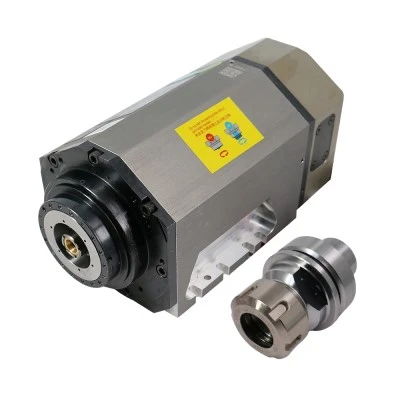

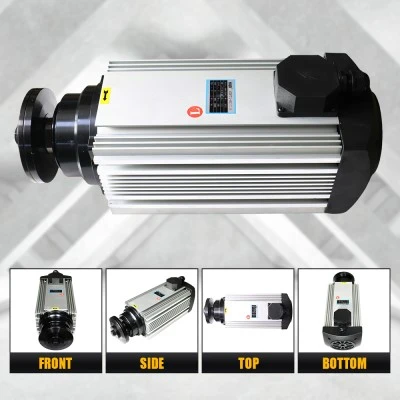


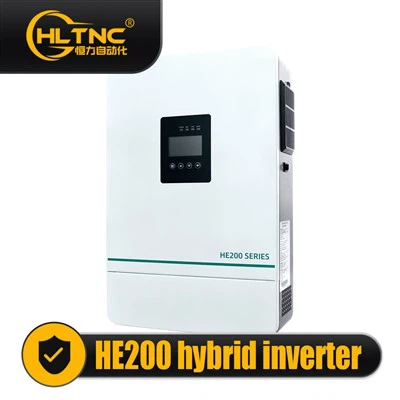


A spindle is only as good as the drive feeding it. Rated power means nothing on its own: the drive has to deliver the spindle’s rated current continuously, follow its speed command, and read its feedback if the spindle has an encoder. We supply the spindle motor, the VFD that drives it and the collets, cooling and cabling around it as one selection, so the current rating and the feedback type are matched before the order is placed.
A spindle and a VFD are bought as one system
The failure mode is predictable. A spindle is ordered for its power rating, a VFD is ordered for the same power rating, and on commissioning the drive faults under load because its continuous output current is below what the spindle draws. Power in kilowatts is a derived figure; current in amps is the one the drive must survive. Selecting both together means the current rating, the speed range and the feedback type are checked against each other once.
Three things that decide the pair
The spindle’s rated current, its rated and maximum speed, and whether it carries an encoder that the drive must read. Power rating alone does not identify a compatible drive.
Spindle or servo spindle
A standard spindle is driven by a VFD on an open-loop speed command. A servo spindle closes the loop on position and speed, which is what a machine needs when the spindle also has to index or act as a C-axis. The drive family follows from that decision.
Choosing the spindle: taper, speed and torque
Start from the tool, not from the spindle. The toolholder decides the taper, the material and cutter diameter decide the torque and speed you need, and the machine structure decides how much weight it will carry at the end of the Z axis.
| What you know | What it decides |
|---|---|
| Toolholder type (ER collet, BT, HSK) | Taper and drawbar arrangement — and therefore which spindle family applies |
| Material and largest cutter | Torque at cutting speed, which sets the power rating you actually need |
| Required surface speed | Maximum spindle speed, and whether water cooling is mandatory |
| Z-axis structure and payload | Spindle weight and length; a heavier spindle changes the machine’s dynamics |
| Duty cycle | Whether the spindle runs continuously at rated power or intermittently |
For an automatic tool change the spindle also needs the right tool-changer interface and the pneumatic or electrical supply to release it. That requirement is worth settling before the spindle is chosen, because not every spindle body has room for it.
Choosing the VFD that can drive it
Four checks decide whether a given VFD will run a given spindle, and all four are answered from documents rather than from testing.
| Check | What to compare |
|---|---|
| Continuous output current | The VFD’s continuous rating must cover the spindle’s rated current, not its peak. Compare amps to amps, at the same ambient temperature. |
| Speed range and control mode | The VFD must hold the spindle’s minimum and maximum speed, and use a control mode appropriate to the load (constant torque or constant power above base speed). |
| Feedback interface | If the spindle carries an encoder, the VFD must accept that encoder type; otherwise the loop cannot be closed and the drive runs open-loop only. |
| Braking energy | A stopping spindle regenerates. The VFD needs an appropriate braking arrangement for the inertia and the deceleration time you are asking for. |
Ask for the current figure in writing
When we quote a spindle and a VFD together, we state both current figures on the same quotation. That single line removes the most common commissioning fault on a spindle axis, and it is the first thing to check if you are comparing quotations from two suppliers.
Spindle, VFD and kit series we supply
The table below is the servo spindle kit range exactly as published on the sub-pages. Each kit pairs a spindle motor with the drive that carries its current.
| Drive | Spindle | Power | Current | Torque | Speed |
|---|---|---|---|---|---|
| S3-H37F (20 A) | MY165-235C | 3.7 kW | 7.8 A | 23.5 N·m | 1500 / 1800 rpm |
| S3-H55F (30 A) | MY204-350C | 5.5 kW | 13 A | 35 N·m | 1500 / 1800 rpm |
| S3-H75F (42 A) | MY204-478C | 7.5 kW | 17.8 A | 47.8 N·m | 1500 / 1800 rpm |
Kit supply voltage is 380 V, and the kit is ordered as a set: drive, spindle motor, feedback component and braking arrangement together. Around the kit we also supply CNC spindle motors, ATC spindles, ATC spindles for DIY routers, 5-axis spindles, saw blade spindles, CNC variable frequency drives, spindle dust shoes, 3D touch probes and the S3A servo spindle kit on this page.
Sourcing the spindle and the drive together
Anyone who has bought a vfd spindle on price alone has met the same problem: the drive arrives with a current rating that will not hold the spindle under load. Chinese vfd manufacturers are numerous and do not all write specifications the same way, so the comparison has to be made figure by figure rather than brand by brand.
The questions worth putting in writing are these. Which vfd drive manufacturers state the continuous output current rather than only the power rating? Does the drive accept the encoder fitted to the spindle? And is it rated for the duty cycle you intend? A cnc vfd selected on power alone is the usual reason a commissioning day is lost.
The same discipline applies whatever spindle you are fitting. A cnc router spindle for woodworking, a cnc atc spindle with automatic tool change, a general tool changer spindle from another factory, or a 5 axis spindle for a machining centre — in each case the spindle, the spindle collet or toolholder it carries, and the drive form a single specification, and the current figure is the one that decides whether it works.
This is also why VFD builders and spindle builders are usually compared separately and bought together: the two halves tend to come from different firms. If you want one point of responsibility, ask for the drive and the spindle on the same quotation with both current figures stated. That single line is the most useful thing on the page, and it is the first thing to check when quotations from two suppliers look otherwise identical.
Narrowing a list of spindle and VFD manufacturers
Two different searches usually start the process, and they are not the same search. The first is for spindle manufacturers: you are choosing who machines the body, grinds the taper and balances the rotor. The second is for vfd manufacturers or frequency drive manufacturers, who build the electronics that will feed it. Some spindle manufacturers build their own drives; most variable frequency drive manufacturers build no spindles at all. Knowing which kind of company you are talking to decides which questions are worth asking.
With a spindle manufacturer, the useful question is what is made in house. The runout figure a buyer relies on comes from grinding the taper and balancing the rotor, so ask whether those steps happen on the maker’s own floor or are bought in. The same question applies to a cnc spindle manufacturer quoting a taper from elsewhere. Among spindles manufacturers the range of what is actually manufactured, as opposed to assembled, is wide — spindle manufacturing can mean either. Asking where the taper is ground is the quickest way to tell the two apart.
On the drive side the field is broader still. VFD manufacturers range from firms with a full variable frequency drive manufacturers catalogue down to vfd drives manufacturers and vfd suppliers who rebadge another vfd manufacturer’s product. That is not automatically a reason to walk away, but it changes what you can ask for: a rebadger cannot normally alter firmware or supply the register map for a fieldbus integration. Where a variable frequency drive suppliers listing states the continuous output current and the encoder interface, you can compare it on figures; where it states only a power band, you cannot.
Price behaves the same way on both sides. CNC spindles for sale at the lowest listed number are usually a bare body, and the cnc spindle for sale figure worth comparing includes the collet, the feedback device and the drive. A quotation that omits them is not comparable to one that includes them, whatever the headline number says.
Cooling, collets and the accessories that finish the spindle
A spindle arrives as a body. What makes it usable on a machine is the set of parts around it, and these are the ones most often forgotten on the first order.
| Part | Why it belongs in the same order |
|---|---|
| Collet and nut | The collet size has to match the tool shank and the spindle taper. A collet that is right for the spindle but wrong for the tool is a second shipment, so the spindle collet is quoted with the body. |
| Water cooling | A water-cooled spindle needs the flow and temperature controlled as part of commissioning, not added afterwards. Air-cooled units remove that requirement. |
| Dust shoe and extraction | Cutting composite or timber produces dust that enters the spindle and the linear axes. The shoe is part of the machine, but it is specified with the spindle. |
| Feedback component | Where the spindle is indexed or used as a C-axis, the encoder is ordered with the spindle so the drive can be selected against it. |
| Braking arrangement | Sized against the spindle inertia. For the S3A-H75 kit the published figure is a brake resistor of 30 Ω or greater — a value specific to that kit. |
| Communication interface | RS485, where the machine controller rather than the drive keypad sets the speed and reads status. |
What we check before dispatch
The pairing is checked, not assumed
Before a spindle and a VFD ship as a kit, the drive’s continuous output current is checked against the spindle’s rated current, and the feedback type is checked against the drive’s interface. Both figures appear on the published kit table above, which is why the table lists the drive and the motor together rather than separately.
What you receive
The nameplate model code for the spindle motor and for the drive, the rated figures they were built to, and the wiring and commissioning reference for the pair. Model codes such as ZMYA-380-165L-15-60-3R7-RE2-B35-28J-KN identify the frame, voltage, speed and power in one string, so a replacement can be traced from the label alone.
Tell us the toolholder, the material and the largest cutter and we will size the spindle and the drive together, with both current figures stated. If you already have a spindle, send its rated current, speed range and encoder type — that is enough to select a compatible drive without further questions.