

Hey there, fellow machining enthusiasts! Today, I'm gonna dive into the nitty - gritty of the difference between a 3 - Axis and a 4th Axis machine. As a 4th Axis supplier, I've seen firsthand how these machines can revolutionize the manufacturing process, and I'm stoked to share my knowledge with you.
Let's start with the basics. A 3 - Axis machine is like the bread and butter of the machining world. It operates on three linear axes: X, Y, and Z. The X - axis moves left and right, the Y - axis moves forward and backward, and the Z - axis moves up and down. This setup allows for a wide range of simple to moderately complex machining operations, such as milling flat surfaces, drilling holes, and cutting straight edges.
For example, if you're making a simple rectangular block with holes in it, a 3 - Axis machine can get the job done efficiently. You can program the machine to move along the X, Y, and Z axes to drill holes at specific locations and mill the surfaces to the desired dimensions. It's a tried - and - true technology that has been used in manufacturing for decades.
However, when you step into the world of the 4th Axis machine, things get a whole lot more interesting. A 4th Axis machine adds an additional rotational axis to the mix, usually around the X, Y, or Z axis. This rotational movement allows for more complex geometries to be machined in a single setup.

Imagine you're making a cylindrical part with grooves or holes around its circumference. With a 3 - Axis machine, you'd have to manually reposition the part multiple times to machine different sides, which is time - consuming and can lead to inaccuracies. But with a 4th Axis machine, you can simply rotate the part around the additional axis while the cutting tool does its thing. This means you can machine the entire part in one go, saving time and improving precision.
One of the key advantages of a 4th Axis machine is its ability to create parts with undercuts and complex contours. For instance, if you're making a mold with an intricate shape, a 4th Axis machine can access areas that would be impossible or extremely difficult to reach with a 3 - Axis machine. It gives you the flexibility to create parts that have a high level of detail and complexity.
Another benefit is increased productivity. Since you can machine multiple sides of a part without repositioning it, you can reduce setup time and increase the overall throughput of your manufacturing process. This is especially important in high - volume production environments where every minute counts.
Now, let's talk about the applications. 3 - Axis machines are great for general machining tasks, like making simple parts for the automotive, aerospace, and consumer goods industries. They're also a popular choice for small - scale workshops and hobbyists because they're relatively affordable and easy to operate.
On the other hand, 4th Axis machines are often used in industries where precision and complexity are crucial, such as medical device manufacturing, aerospace components production, and high - end automotive parts. For example, in the medical field, 4th Axis machines can be used to create custom - made implants with complex shapes that fit perfectly into the human body.
But it's not all sunshine and rainbows with 4th Axis machines. They do come with a higher price tag compared to 3 - Axis machines. The additional technology and components required for the rotational axis make them more expensive to purchase and maintain. Also, programming a 4th Axis machine can be more challenging than programming a 3 - Axis machine. You need to have a good understanding of the rotational movement and how it affects the machining process.
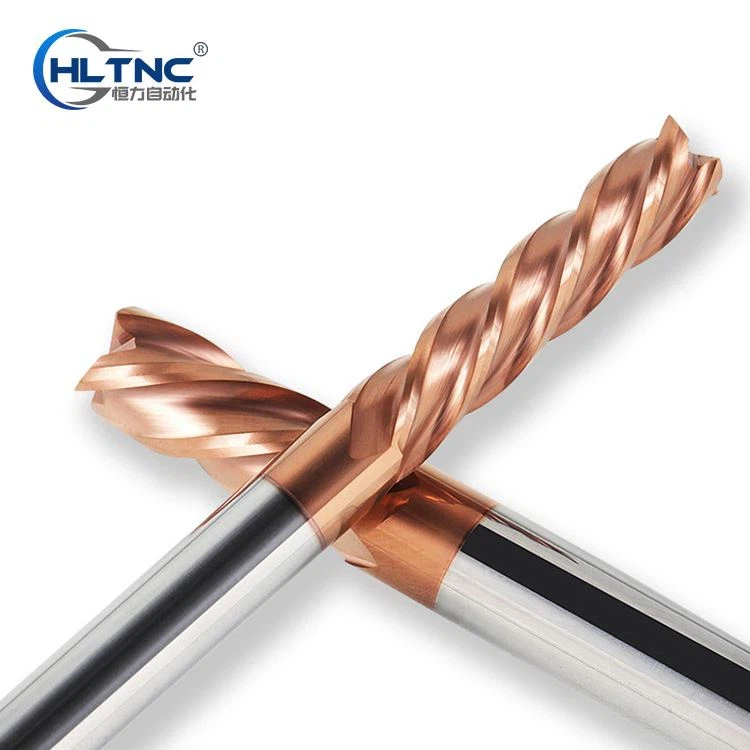
If you're in the market for some parts to upgrade your 3 - Axis or 4th Axis machine, we've got you covered. Check out our Manual Oil Pump, which is essential for lubricating your machine and keeping it running smoothly. The T Lead Screw is another great addition that can improve the accuracy of your machine's linear movement. And for those tough cutting jobs, our CNC Cutting Tools 4 Flutes are top - notch and can handle a variety of materials.
In conclusion, both 3 - Axis and 4th Axis machines have their place in the manufacturing world. A 3 - Axis machine is a reliable workhorse for simple to moderately complex tasks, while a 4th Axis machine takes things to the next level by allowing for more complex geometries and increased productivity.
If you're thinking about taking your machining capabilities to the next level with a 4th Axis machine or need any of the parts I mentioned, don't hesitate to reach out. We're here to help you make the right choice for your business. Whether you're a small - scale workshop or a large - scale manufacturing plant, we can provide you with the products and support you need.
So, if you're interested in learning more or starting a procurement discussion, just drop us a line. We'll be happy to chat with you and see how we can work together to boost your manufacturing efficiency.
References
- "CNC Machining Handbook", Industry Press
- "Advanced Manufacturing Technologies", Academic Publishers


