A linear guide, also known as a linear slide, linear motion guide, or linear bearing, is a crucial component in various industrial and mechanical applications. As a leading supplier of linear guides, I'm excited to share with you how these remarkable devices work and their significance in modern engineering.
Basic Structure of a Linear Guide
At its core, a linear guide consists of two primary components: a rail and a carriage. The rail is a long, straight bar that serves as the track along which the carriage moves. The carriage, on the other hand, is the part that slides along the rail, carrying the load. The design of these components can vary significantly depending on the specific application and requirements.
The rail is typically made of high - strength steel or other durable materials to ensure it can withstand the forces exerted on it. It is precisely machined to have a smooth surface, which is essential for the smooth movement of the carriage. Some rails, like the MGN Linear Rail, are designed for miniature applications, offering high precision and compactness.
The carriage contains rolling elements, such as balls or rollers, which are the key to the smooth movement of the linear guide. These rolling elements are housed in a cage or a raceway within the carriage. The cage helps to keep the rolling elements evenly spaced and prevents them from colliding with each other, ensuring a consistent and smooth motion.
How the Rolling Elements Work
The rolling elements in the carriage play a vital role in the operation of the linear guide. When a load is applied to the carriage, the rolling elements distribute the load evenly across the rail. This distribution of load reduces the friction between the carriage and the rail, allowing the carriage to move with minimal effort.
In ball - type linear guides, the balls roll along the raceways in the carriage and on the rail. The contact between the balls and the raceways is a point contact, which results in very low friction. This low friction enables the linear guide to achieve high speeds and high precision. For example, in high - speed machining centers, ball - type linear guides are often used to ensure fast and accurate movement of the cutting tool.
Roller - type linear guides, such as Roller Guide Rails, use rollers instead of balls as the rolling elements. Rollers have a larger contact area with the raceways compared to balls. This larger contact area allows roller - type linear guides to handle heavier loads. They are commonly used in applications where high load - carrying capacity is required, such as in heavy - duty industrial machinery and large - scale automation systems.
Preloading and its Importance
Preloading is a technique used in linear guides to eliminate the clearance between the rolling elements and the raceways. By applying a certain amount of preload, the linear guide can achieve higher stiffness and accuracy. When a preload is applied, the rolling elements are pressed against the raceways, creating a pre - stressed state.
In applications where high precision is required, such as in semiconductor manufacturing equipment or optical inspection systems, preloading is essential. It helps to reduce the backlash, which is the small amount of free movement between the carriage and the rail. Backlash can cause inaccuracies in positioning, and by eliminating it through preloading, the linear guide can provide more precise and repeatable motion.
Lubrication in Linear Guides
Lubrication is another critical aspect of linear guide operation. Proper lubrication reduces friction, wear, and heat generation, which helps to extend the service life of the linear guide. There are different types of lubricants available for linear guides, including grease and oil.
Grease is a common lubricant for linear guides because it is easy to apply and can stay in place for a long time. It forms a protective film on the surfaces of the rolling elements and the raceways, preventing direct metal - to - metal contact. However, grease may need to be replaced periodically, especially in high - speed or high - load applications.

Oil lubrication is often used in applications where high - speed operation is required. Oil can provide better cooling and lubrication properties compared to grease. It can be circulated through the linear guide system to remove heat and contaminants. In some cases, an automatic lubrication system is used to ensure a continuous supply of oil to the linear guide.
Applications of Linear Guides
Linear guides are widely used in a variety of industries due to their ability to provide smooth, accurate, and reliable linear motion. In the manufacturing industry, they are used in machine tools, such as lathes, milling machines, and grinders. Linear guides enable these machines to move the cutting tool or the workpiece with high precision, resulting in high - quality machined parts.
In the automation industry, linear guides are essential for the movement of robotic arms, conveyor systems, and pick - and - place machines. They allow these automated systems to perform repetitive tasks with high speed and accuracy, improving productivity and efficiency.
The semiconductor industry also relies heavily on linear guides. In semiconductor manufacturing equipment, such as wafer steppers and wire bonders, linear guides are used to position the wafers and other components with extremely high precision. The high precision and reliability of linear guides are crucial for the production of high - density integrated circuits.
Our Offerings as a Linear Guide Supplier
As a linear guide supplier, we offer a wide range of products to meet the diverse needs of our customers. Our MGN Linear Rail is a popular choice for miniature applications, providing high precision and compactness. Our Roller Guide Rails are designed for heavy - load applications, offering excellent load - carrying capacity and durability.
In addition to our standard products, we also provide customized solutions. We understand that different customers have different requirements, and we are committed to working with our customers to develop linear guide solutions that meet their specific needs. Our team of experienced engineers can provide technical support and advice throughout the design and implementation process.
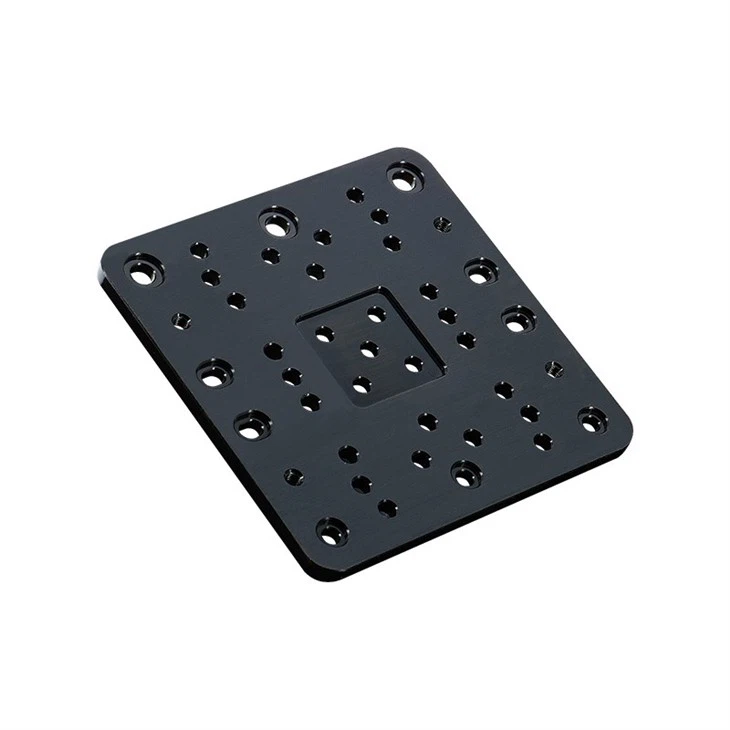
We also offer high - quality Black Aluminium Plate as an accessory for some of our linear guide systems. The black aluminium plate provides a smooth and durable surface for the linear guide, enhancing its performance and appearance.
Contact Us for Procurement
If you are in the market for high - quality linear guides or need more information about our products and services, we encourage you to contact us. Our team is ready to assist you in finding the right linear guide solutions for your applications. We can provide detailed product specifications, pricing information, and technical support.
Whether you are a small - scale manufacturer looking for a compact linear guide or a large - scale industrial company in need of heavy - duty roller guide rails, we have the expertise and products to meet your needs. Don't hesitate to reach out to us and start a procurement discussion.
References
- "Linear Motion Technology Handbook"
- "Engineering Mechanics: Statics and Dynamics"
- Industry - specific technical journals and research papers on linear motion systems.