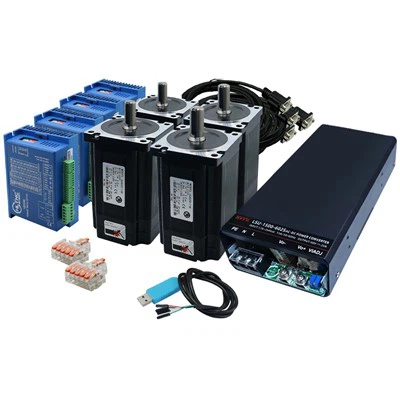
Thermal stability is a critical factor in the performance and longevity of a CNC ATC (Automatic Tool Changer) Spindle. As a supplier of CNC ATC Spindles, I understand the importance of this characteristic and how it can impact the overall efficiency and quality of machining operations.
Understanding Thermal Stability
Thermal stability refers to the ability of a CNC ATC Spindle to maintain its performance and accuracy under varying temperature conditions. When a spindle operates, it generates heat due to friction between moving parts, electrical losses in the motor, and other factors. This heat can cause the spindle components to expand, which may lead to dimensional changes, misalignments, and reduced accuracy.
A spindle with good thermal stability can minimize these effects by effectively dissipating heat and maintaining a consistent operating temperature. This is crucial for achieving high-precision machining, as even small temperature variations can have a significant impact on the final product quality.
Factors Affecting Thermal Stability
Several factors can influence the thermal stability of a CNC ATC Spindle. Understanding these factors is essential for selecting the right spindle for your specific application and ensuring its optimal performance.
1. Motor Design
The motor is one of the primary sources of heat generation in a spindle. Different motor designs have varying levels of efficiency and heat dissipation capabilities. For example, CNC Spindle MOTOR with advanced cooling systems, such as liquid cooling or forced-air ventilation, can effectively remove heat from the motor, reducing the operating temperature and improving thermal stability.
2. Lubrication
Proper lubrication is essential for reducing friction and heat generation in the spindle bearings. High-quality lubricants with excellent thermal properties can help to dissipate heat and prevent excessive wear and tear on the bearings. Regular lubrication maintenance is also crucial to ensure optimal performance and thermal stability.


3. Cooling Systems
In addition to motor cooling, external cooling systems can be used to further enhance the thermal stability of the spindle. These systems can include cooling jackets, chillers, or heat exchangers, which help to remove heat from the spindle housing and other components. The effectiveness of the cooling system depends on its design, capacity, and the ability to maintain a consistent coolant temperature.
4. Material Selection
The materials used in the construction of the spindle components can also affect its thermal stability. Materials with high thermal conductivity, such as aluminum or copper, can help to transfer heat away from the critical areas of the spindle, reducing the temperature rise and improving performance. Additionally, materials with low thermal expansion coefficients can minimize dimensional changes due to temperature variations, ensuring better accuracy and stability.
Importance of Thermal Stability in CNC Machining
Thermal stability plays a crucial role in various aspects of CNC machining, including:
1. Accuracy
In high-precision machining operations, even small temperature changes can cause dimensional errors in the workpiece. A thermally stable spindle can maintain its accuracy over extended periods of operation, ensuring that the finished parts meet the required tolerances.
2. Surface Finish
Heat generation in the spindle can affect the cutting performance and the surface finish of the machined parts. A stable operating temperature helps to prevent tool wear, chatter, and other issues that can degrade the surface quality.
3. Tool Life
Excessive heat can cause premature wear and failure of cutting tools. By maintaining a consistent temperature, a thermally stable spindle can extend the tool life, reducing tooling costs and downtime.
4. Productivity
A spindle with good thermal stability can operate at higher speeds and feed rates without sacrificing accuracy or surface finish. This can lead to increased productivity and reduced cycle times, improving the overall efficiency of the machining process.
Our Solutions for Thermal Stability
As a leading supplier of CNC ATC Spindles, we are committed to providing high-performance spindles with excellent thermal stability. Our spindles are designed and manufactured using advanced technologies and high-quality materials to ensure optimal heat dissipation and temperature control.
1. Advanced Motor Technology
Our CNC Spindle MOTOR feature advanced designs and cooling systems to minimize heat generation and improve efficiency. These motors are engineered to provide high torque and power output while maintaining a low operating temperature, ensuring reliable performance and long service life.
2. Effective Cooling Systems
We offer a range of cooling solutions for our spindles, including liquid cooling, forced-air ventilation, and hybrid cooling systems. These systems are designed to remove heat from the spindle quickly and efficiently, maintaining a stable operating temperature even under heavy loads.
3. High-Quality Lubrication
We use high-performance lubricants with excellent thermal properties in our spindles to reduce friction and heat generation. Our lubrication systems are designed to provide continuous and consistent lubrication to the bearings, ensuring smooth operation and long-term reliability.
4. Rigorous Testing
Before leaving our factory, each of our CNC ATC Spindles undergoes rigorous testing to ensure its thermal stability and performance. We use advanced testing equipment and techniques to simulate real-world operating conditions and measure the spindle's temperature rise, accuracy, and other critical parameters.
Conclusion
Thermal stability is a crucial aspect of CNC ATC Spindle performance, and it can significantly impact the accuracy, surface finish, tool life, and productivity of machining operations. As a supplier of CNC ATC Spindles, we understand the importance of providing spindles with excellent thermal stability to meet the needs of our customers.
If you are looking for a reliable and high-performance CNC ATC Spindle with excellent thermal stability, please do not hesitate to contact us for further discussion and procurement negotiation. We are committed to providing you with the best solutions and support to help you achieve your machining goals.
References
- "CNC Spindle Technology and Applications." Industrial Press, Inc.
- "Thermal Management in Machine Tools." Annals of the CIRP, Vol. 60, No. 2, 2011.
- "Advanced Cooling Techniques for CNC Spindles." Proceedings of the 20th International Machine Tool Design and Research Conference, 1999.