Introduction:
Gears and racks are essential components of machines and systems that require the transmission of rotational motion or power. They offer an efficient and reliable way of transmitting torque and speed from one machine or system component to another. Gears and racks are used in various applications, including automobiles, machinery, robotics, aerospace systems, and more.
In this article, we will provide an in-depth explanation of gears and racks, including their design, construction, applications, advantages, and disadvantages. We hope that this article will help readers gain a better understanding of these important components in machines and systems.
What is a Gear?
A gear is a mechanical component with teeth that is used to transmit torque and speed between two rotating shafts. It is essentially a type of wheel with teeth that mesh with the teeth of another gear or rack. Gears come in different types, sizes, and materials to suit different applications.
Gears may be classified based on their relationship to each other, the configuration of their teeth, or the direction of their motion. The most common types of gears are spur gears, bevel gears, helical gears, worm gears, and planetary gears.
Spur Gears:
Spur gears are the simplest and most common type of gears. They consist of two parallel, cylindrical gears with straight teeth that mesh with each other. Spur gears are used in applications that require high speed and low torque transmission, such as in watches, clocks, and electric motors.
The advantages of spur gears include their simplicity, low cost, and easy maintenance. However, they are not ideal for applications that require high torque transmission due to their noise and vibration issues.
Bevel Gears:
Bevel gears are used to transmit power between two shafts that are not parallel to each other. They have a conical shape with teeth that mesh at a 90-degree angle. Bevel gears are commonly used in automotive differentials and machine tools.
Bevel gears offer a smooth and quiet operation and are ideal for transmitting torque at a right angle. However, due to their complex shape and manufacturing process, they are expensive.
Helical Gears:
Helical gears have teeth that are cut at an angle to the gear axis. They are used in applications that require high load capacity and smooth operation, such as in industrial machinery and heavy equipment.
Helical gears offer improved strength and load-carrying capacity compared to spur gears. However, due to their inclined teeth, they generate axial and radial forces that can cause noise and thrust issues.
Worm Gears:
Worm gears consist of a worm and a worm wheel. The worm is a cylindrical gear with a spiral thread that meshes with the teeth of the worm wheel. They are used in applications that require high reduction ratios and low speed transmission, such as in elevators, escalators, and winches.
Worm gears offer high reduction ratios and can transmit power at a right angle. However, due to their low efficiency and high friction, they generate heat and wear issues.
Planetary Gears:
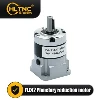
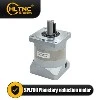
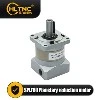
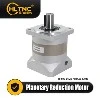
Planetary gears consist of a sun gear, planet gears, and a ring gear. The sun gear is located at the center, surrounded by planet gears that mesh with both the sun gear and the outer ring gear. They are used in applications that require high torque transmission and compact design, such as in automobiles, robotics, and aerospace systems.
Planetary gears offer high torque capacity, high efficiency, and compact design. However, due to their complex design and high precision manufacturing, they are expensive and require careful maintenance.
What is a Rack?
A rack is a mechanical component that is used to convert rotational motion into linear motion. It is essentially a straight or curved bar with teeth that mesh with the teeth of a gear. Racks are used in applications that require precise and smooth linear motion, such as in CNC machines, robots, and machine tools.
Racks may be classified based on the shape of their teeth, the material of their construction, or the direction of their motion. The most common types of racks are straight racks, helical racks, circular racks, and pinion racks.
Straight Racks:
Straight racks are the simplest and most common type of racks. They consist of a straight bar with straight teeth that mesh with the teeth of a gear. Straight racks are used in applications that require linear motion without angular displacement, such as in CNC machines, printing presses, and machine tools.
The advantages of straight racks include their simplicity, low cost, and easy maintenance. However, they are not ideal for applications that require high precision and smooth linear motion due to their potential for backlash and wear.
Helical Racks:
Helical racks have teeth that are cut at an angle to the rack axis. They are used in applications that require high precision and smooth linear motion, such as in CNC machines, robots, and machine tools.
Helical racks offer improved precision and smoother linear motion compared to straight racks. However, due to their inclined teeth, they generate axial and radial forces that can cause noise and thrust issues.
Circular Racks:
Circular racks are used in applications that require circular linear motion, such as in rotary tables, indexing tables, and turntables. They consist of a circular bar with teeth that mesh with the teeth of a gear.
Circular racks offer smooth and precise circular linear motion and are ideal for applications that require indexing or positioning. However, due to their circular shape, they are difficult to manufacture and can be expensive.
Pinion Racks:
Pinion racks consist of a rack and a pinion gear that mesh with each other. They are used in applications that require high precision and compact design, such as in robotics, automation, and machine tools.
Pinion racks offer high precision, smooth linear motion, and compact design. However, due to their complex shape and high precision manufacturing, they are expensive and require careful maintenance.
Conclusion:
Gears and racks are essential components in machines and systems that require the transmission of rotational motion or power. They offer a reliable, efficient, and precise way of transmitting torque and speed between machine or system components.
In this article, we have provided an in-depth explanation of gears and racks, including their design, construction, applications, advantages, and disadvantages. We hope that this article has helped readers gain a better understanding of these important components in machines and systems.