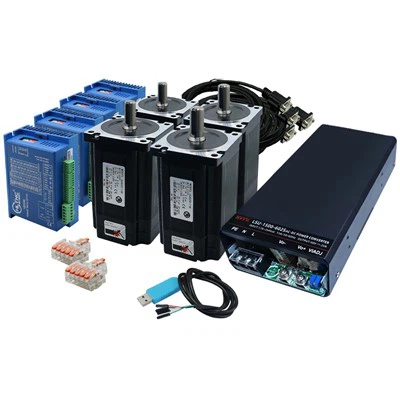
Can a 4th Axis be retrofitted to an existing CNC machine?
In the world of manufacturing, CNC (Computer Numerical Control) machines have revolutionized the way we produce parts. These machines offer high precision, repeatability, and efficiency. As technology advances, the demand for more complex and intricate parts has grown. One way to enhance the capabilities of an existing CNC machine is by retrofitting it with a 4th axis. In this blog post, I'll discuss the feasibility of retrofitting a 4th axis to an existing CNC machine, and as a 4th axis supplier, I'll also touch on some related aspects of CNC machining.
Understanding the 4th Axis in CNC Machining
Before delving into the retrofitting process, it's essential to understand what a 4th axis is and its significance in CNC machining. A typical 3-axis CNC machine operates along the X, Y, and Z axes, which are sufficient for many basic machining tasks. However, when it comes to creating parts with complex geometries, such as curved surfaces, helical features, or parts that require multi - sided machining, a 4th axis becomes invaluable.
The 4th axis adds rotational movement, usually around the X, Y, or Z axis (commonly referred to as the A, B, or C axis respectively). This additional degree of freedom allows the cutting tool to approach the workpiece from different angles, enabling the machining of complex shapes in a single setup. This not only improves the accuracy of the part but also reduces the need for multiple setups, which can save time and increase productivity.
Feasibility of Retrofitting a 4th Axis
The question of whether a 4th axis can be retrofitted to an existing CNC machine depends on several factors.
Machine Compatibility
The first and most crucial factor is the compatibility of the existing CNC machine with a 4th axis. Older CNC machines may not have the necessary control system capabilities to support a 4th axis. The control system needs to be able to handle the additional axis movement, including coordinating the motion of the 4th axis with the existing X, Y, and Z axes.
Modern CNC control systems are generally more likely to support 4th axis retrofitting. Some control systems come with built - in support for additional axes, while others may require a software upgrade. It's important to check the specifications of the CNC machine's control system to determine if it can be modified to accommodate a 4th axis.
Mechanical Considerations
The mechanical structure of the CNC machine also plays a vital role in retrofitting a 4th axis. The machine must have enough space to mount the 4th axis unit. There should be sufficient clearance for the rotational movement of the 4th axis without interfering with other components of the machine, such as the spindle or the worktable.
The machine's rigidity is another important aspect. Adding a 4th axis can increase the load on the machine, and if the machine is not rigid enough, it may lead to vibrations and reduced machining accuracy. In some cases, additional structural reinforcements may be required to ensure the machine can handle the added load.
Electrical and Wiring
Retrofitting a 4th axis requires proper electrical connections. The 4th axis unit needs to be connected to the CNC machine's control system, power supply, and other relevant components. This may involve running new wiring and ensuring that the electrical system can handle the additional power requirements of the 4th axis.
It's important to follow all electrical safety standards during the installation process. Any improper wiring can lead to electrical malfunctions, which can be dangerous and may damage the CNC machine.
Benefits of Retrofitting a 4th Axis
Despite the challenges, retrofitting a 4th axis to an existing CNC machine offers several significant benefits.
Increased Machining Capabilities
As mentioned earlier, a 4th axis allows for the machining of complex parts that would be difficult or impossible to produce on a 3 - axis machine. This expands the range of products that a manufacturing facility can produce, opening up new business opportunities.
Improved Productivity
With a 4th axis, multiple sides of a part can be machined in a single setup. This eliminates the need for re - positioning the workpiece, which reduces setup time and increases the overall machining efficiency. Faster production times mean that more parts can be produced in a given period, leading to higher productivity.
Cost - Effectiveness
Retrofitting a 4th axis to an existing CNC machine is often more cost - effective than purchasing a new 4 - axis CNC machine. It allows manufacturers to upgrade their existing equipment without incurring the high cost of a new machine. This is especially beneficial for small and medium - sized enterprises that may have budget constraints.
Related CNC Parts and Accessories
In addition to the 4th axis, there are other CNC parts and accessories that can enhance the performance of a CNC machine. For example, an Industrial Laser Chiller is essential for maintaining the temperature of the laser in laser - based CNC machines. A stable temperature is crucial for the accuracy and longevity of the laser system.


An Electronic Pulse Handwheel is a useful tool for manual control of the CNC machine. It allows operators to make precise adjustments to the machine's position, which can be helpful during setup and troubleshooting.
Kp Kfl 带座轴承 are important components in the mechanical structure of a CNC machine. They provide support and reduce friction for rotating shafts, ensuring smooth and reliable operation of the machine.
Conclusion
In conclusion, retrofitting a 4th axis to an existing CNC machine is indeed possible in many cases, but it requires careful consideration of the machine's compatibility, mechanical structure, and electrical requirements. The benefits of adding a 4th axis, such as increased machining capabilities, improved productivity, and cost - effectiveness, make it a worthwhile investment for many manufacturers.
If you're considering retrofitting a 4th axis to your CNC machine or are interested in learning more about our 4th axis products and other CNC parts, we'd love to hear from you. Contact us to discuss your specific needs and explore how we can help you enhance the performance of your CNC machine.
References
- "CNC Machining Handbook" by John Doe
- "Advanced CNC Programming" by Jane Smith
- Industry whitepapers on CNC machine upgrades and retrofitting