

Hey there, fellow CNC machining enthusiasts! As a supplier of high - quality CNC End Mill, I've seen firsthand the challenges that come with choosing the right end mill for cast iron machining in CNC operations. In this blog, I'll share some tips and tricks to help you make the best choice.
First off, let's talk about why choosing the right end mill for cast iron is so important. Cast iron is a unique material. It's hard and abrasive, which means the wrong end mill can wear out quickly, leading to poor surface finish, inaccurate cuts, and increased production costs. On the other hand, the right end mill can boost efficiency, extend tool life, and improve the overall quality of your machined parts.
Material and Coating
The material of the end mill is a crucial factor. High - speed steel (HSS) end mills were once the go - to option for many machining tasks. They're relatively inexpensive and can handle a variety of materials. However, when it comes to cast iron, HSS end mills may not be the best choice. Cast iron's abrasiveness can cause HSS end mills to wear out rapidly.
Carbide end mills are a much better option for cast iron machining. Carbide is extremely hard and can withstand the high temperatures and abrasion associated with cutting cast iron. It offers better tool life and can maintain sharp cutting edges for longer periods. For even better performance, look for carbide end mills with a coating. Coatings like titanium nitride (TiN), titanium carbonitride (TiCN), and aluminum titanium nitride (AlTiN) can further enhance the end mill's hardness, reduce friction, and improve chip evacuation.
If you're in the market for a top - notch CNC End Mill, you can check out our selection at CNC End Mill. We offer a wide range of carbide end mills with different coatings to suit your specific needs.
Geometry
The geometry of the end mill also plays a significant role in cast iron machining. The number of flutes, helix angle, and end mill shape all affect how the end mill performs.
Number of Flutes: When machining cast iron, end mills with fewer flutes are often preferred. Two - flute or three - flute end mills are great for roughing operations. Fewer flutes provide more space for chip evacuation, which is crucial when cutting a material like cast iron that produces large chips. On the other hand, for finishing operations, you might consider using end mills with more flutes, such as four - flute or five - flute end mills. These can provide a smoother surface finish.
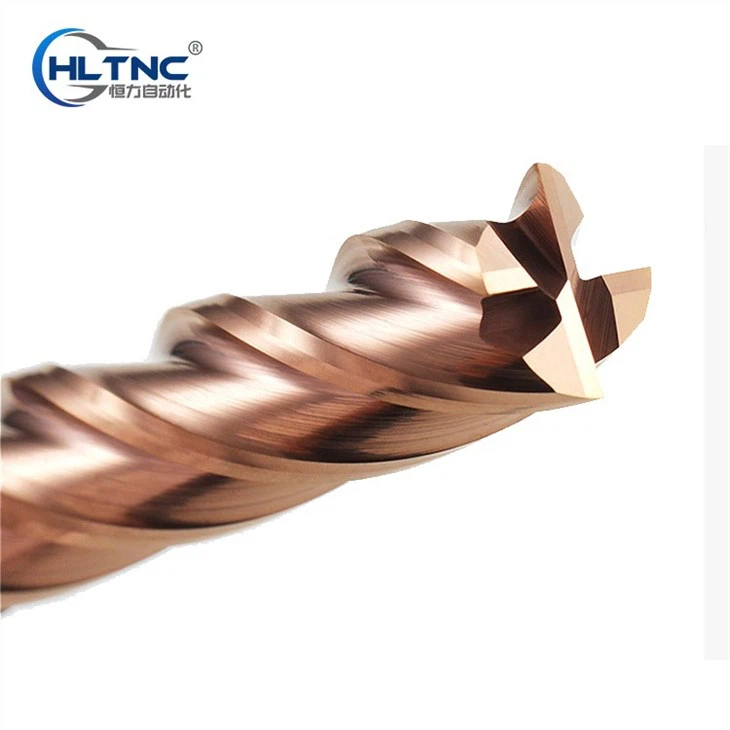

Helix Angle: A high helix angle (around 40 - 45 degrees) is beneficial for cast iron machining. A high helix angle helps with chip evacuation and reduces the likelihood of chip clogging. It also provides a smoother cutting action, which can improve the surface finish of the machined part.
End Mill Shape: Ball nose end mills are useful for contouring and 3D machining of cast iron parts. They can create smooth curves and contours. Square end mills, on the other hand, are better for flat - surface machining and slotting operations.
Cutting Parameters
Choosing the right cutting parameters is just as important as selecting the right end mill. The cutting speed, feed rate, and depth of cut all need to be optimized for cast iron machining.
Cutting Speed: The cutting speed for cast iron depends on the type of cast iron (e.g., gray cast iron, ductile cast iron) and the end mill material. Generally, when using carbide end mills, you can run at higher cutting speeds compared to HSS end mills. For gray cast iron, a cutting speed of around 100 - 200 surface feet per minute (SFM) is a good starting point. However, you may need to adjust this based on your specific machine and setup.
Feed Rate: The feed rate is the speed at which the end mill moves into the workpiece. A higher feed rate can increase productivity, but it also puts more stress on the end mill. For cast iron machining, a feed rate of around 0.002 - 0.005 inches per tooth is a common starting point. Again, you'll need to fine - tune this based on the end mill's performance and the quality of the machined surface.
Depth of Cut: When roughing cast iron, you can take deeper cuts. A depth of cut of 0.05 - 0.1 inches is often used for roughing operations. For finishing, shallower cuts (around 0.005 - 0.01 inches) are recommended to achieve a smooth surface finish.
Application - Specific Considerations
Different CNC machining applications require different types of end mills for cast iron.
Face Milling: For face milling operations, you'll want to use a face mill with carbide inserts. These inserts can be replaced when they wear out, which is more cost - effective than replacing the entire end mill. Make sure to choose inserts with a geometry that's suitable for cast iron, such as a sharp cutting edge and good chip - breaking properties.
Slotting: When slotting cast iron, a square end mill with a high helix angle is a good choice. This type of end mill can handle the high forces associated with slotting and provide good chip evacuation.
Drilling: If you need to drill holes in cast iron, use a drill bit specifically designed for cast iron. These drill bits often have a special point geometry and coating to improve cutting performance and reduce the risk of breakage.
Complementary Parts
In addition to choosing the right end mill, you may also need to consider complementary parts for your CNC machining setup. For example, the 1605 Ball Screw Nut Housing is an important component that can affect the accuracy and stability of your CNC machine. And the End Support Bearing helps to support the ball screw and ensures smooth operation.
In conclusion, choosing the right end mill for cast iron machining in CNC is a multi - faceted process. You need to consider the material and coating of the end mill, its geometry, the cutting parameters, and the specific application. By making informed choices, you can improve the efficiency and quality of your CNC machining operations.
If you have any questions or are interested in purchasing our CNC End Mills or other related parts, feel free to reach out. We're here to help you find the best solutions for your cast iron machining needs.
References
- "Machining Handbook" by Industrial Press Inc.
- "CNC Machining Technology" by various industry experts


