Selecting the appropriate helix angle of a T lead screw is a crucial decision that can significantly impact the performance and efficiency of various mechanical systems. As a T lead screw supplier, I understand the importance of this choice and have extensive experience in guiding customers through the process. In this blog post, I will share some key considerations and guidelines to help you make an informed decision when selecting the helix angle of a T lead screw.
Understanding the Helix Angle of a T Lead Screw
The helix angle of a T lead screw refers to the angle formed between the helix of the thread and a plane perpendicular to the screw axis. It plays a vital role in determining the mechanical advantage, efficiency, and load - carrying capacity of the lead screw. A larger helix angle generally results in a higher linear speed for a given rotational speed of the screw, but it may also reduce the mechanical advantage and increase the required torque to drive the screw. Conversely, a smaller helix angle provides a greater mechanical advantage, which means less torque is needed to move the load, but the linear speed is lower.
Factors to Consider When Selecting the Helix Angle
1. Load Requirements
One of the primary factors to consider is the load that the T lead screw will need to carry. For heavy - load applications, a smaller helix angle is often preferred. A smaller helix angle provides a greater mechanical advantage, allowing the screw to lift or move heavy loads with less input torque. For example, in a large - scale industrial press where significant force is required to compress materials, a T lead screw with a relatively small helix angle can efficiently transfer the necessary force from the motor to the load.
On the other hand, if the load is relatively light, a larger helix angle can be used. This allows for faster linear motion, which is beneficial in applications where speed is a priority, such as in some high - speed automation systems where the lead screw is used to move a light - weight tool or component quickly from one position to another.
2. Speed Requirements
The required linear speed of the system is another important factor. If your application demands high - speed movement, a larger helix angle is more suitable. Since the linear speed of a lead screw is directly related to the helix angle and the rotational speed of the screw, a larger helix angle will result in a higher linear speed for the same rotational speed of the screw. For instance, in a pick - and - place robotic arm that needs to move quickly between different points on a workbench, a T lead screw with a larger helix angle can help achieve the desired speed.
However, it's important to note that increasing the helix angle also increases the friction and the required driving torque. So, when aiming for high - speed operation, the motor and the entire drive system need to be carefully selected to ensure they can provide the necessary power.
3. Efficiency
Efficiency is a critical aspect of any mechanical system. The efficiency of a T lead screw is affected by the helix angle. In general, there is an optimal helix angle range where the efficiency of the lead screw is maximized. This optimal range depends on various factors such as the material of the screw and nut, the lubrication conditions, and the manufacturing quality.
A well - designed T lead screw with an appropriate helix angle can reduce energy consumption and wear on the components. For example, in a long - running automated conveyor system, using a lead screw with an efficient helix angle can save a significant amount of energy over time, reducing operational costs.
4. Backlash and Precision
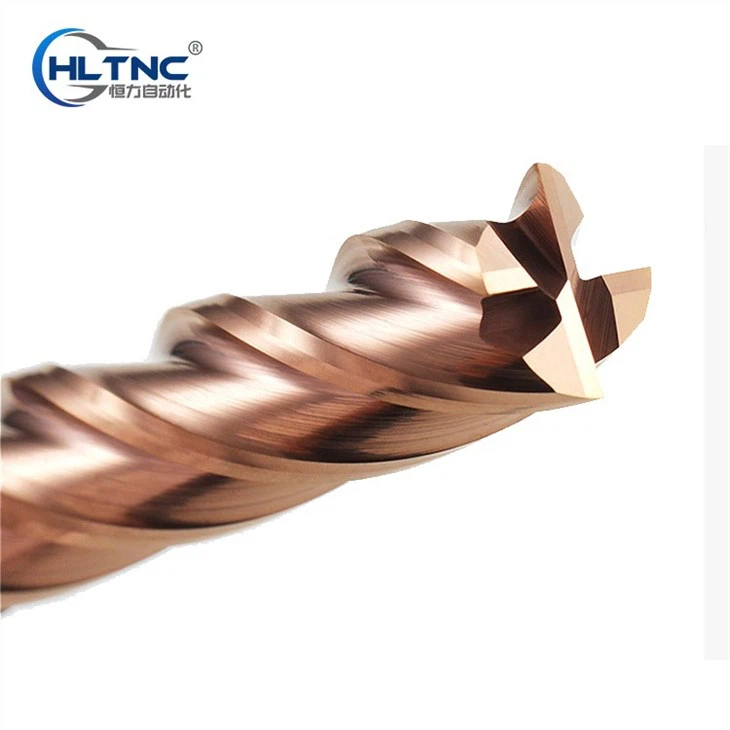
Backlash, which is the amount of play or clearance between the screw and the nut, can also be influenced by the helix angle. In applications where high precision is required, such as in a CNC machining center CNC End Mill, minimizing backlash is crucial. A smaller helix angle can sometimes help reduce backlash, as it provides a more stable and controlled movement.

However, achieving high precision also depends on other factors such as the quality of the lead screw and nut manufacturing, the pre - loading of the nut, and the overall system design.
Application - Specific Considerations
1. Machine Tools
In machine tools, such as lathes and milling machines, the helix angle of the T lead screw is carefully selected based on the specific machining operations. For operations that require high - precision positioning, like fine - surface finishing, a smaller helix angle is often used to ensure accurate movement of the cutting tool. The Ball Screw Fixed End Support is also an important component in these systems to provide stability and support for the lead screw.
On the other hand, for rough machining operations where speed is more important than extreme precision, a larger helix angle may be chosen to increase the feed rate of the cutting tool.
2. Automation Systems
Automation systems, including robotics and conveyor systems, have diverse requirements. In robotic arms used for assembly tasks, the helix angle is selected based on the speed and precision needed for picking and placing components. A balance between speed and precision is often required, and the helix angle is chosen accordingly.
In conveyor systems, the helix angle of the lead screw can affect the conveying speed and the ability to handle different types of loads. For example, in a conveyor that transports small, light - weight parts at a high speed, a larger helix angle can be used to achieve the desired throughput.
3. Linear Actuators
Linear actuators are widely used in various industries to convert rotary motion into linear motion. The helix angle of the T lead screw in a linear actuator is selected based on the force, speed, and stroke requirements of the application. For a linear actuator used in a medical device where precise and slow movement is needed, a smaller helix angle is appropriate. In contrast, a linear actuator used in a high - speed packaging machine may require a larger helix angle for faster operation.
Testing and Validation
Once you have selected a potential helix angle based on the above considerations, it is essential to test and validate the performance of the T lead screw in your specific application. This can involve running test setups to measure the actual linear speed, the required torque, the load - carrying capacity, and the overall efficiency of the system.
If possible, it is also beneficial to conduct long - term tests to evaluate the wear and tear of the lead screw and nut over time. This can help you identify any potential issues and make adjustments to the helix angle or other parameters if necessary.
Conclusion
Selecting the appropriate helix angle of a T lead screw is a complex but essential process that requires careful consideration of multiple factors. As a T lead screw supplier, I am committed to helping you make the right choice for your specific application. By understanding your load requirements, speed requirements, efficiency goals, and precision needs, we can work together to select the most suitable helix angle for your T lead screw.
If you are in the process of selecting a T lead screw for your project or have any questions about helix angles or other aspects of lead screw selection, I encourage you to contact me for a detailed discussion. Our team of experts is ready to assist you in finding the optimal solution for your mechanical system.
References
- "Mechanical Design Handbook" by Robert C. Juvinall and Kurt M. Marshek
- "Fundamentals of Machine Elements" by J. E. Shigley and C. R. Mischke
- Industry - specific technical papers and research on lead screw applications