

Selecting the right end mill for brass machining in CNC is a crucial decision that can significantly impact the quality, efficiency, and cost of your manufacturing process. As a trusted CNC End Mill supplier, I understand the complexities involved in this selection process and am here to guide you through the key considerations.
Understanding Brass as a Material
Brass is an alloy composed primarily of copper and zinc, with varying proportions of other elements such as lead, tin, and aluminum. This combination gives brass unique properties that make it a popular choice for a wide range of applications, including electrical components, plumbing fixtures, and decorative items.
One of the main advantages of brass is its excellent machinability. It has a relatively low melting point, which means it can be easily cut and shaped without generating excessive heat. Additionally, brass has good corrosion resistance, making it suitable for use in harsh environments.
However, brass also has some characteristics that need to be taken into account when selecting an end mill. For example, brass can be prone to galling and sticking to the cutting tool, which can lead to poor surface finish and tool wear. It also has a tendency to form built-up edge (BUE), which can cause chipping and breakage of the cutting edges.
Types of End Mills for Brass Machining
There are several types of end mills available for brass machining, each with its own unique features and advantages. The most common types include:
Square End Mills
Square end mills are the most basic type of end mill and are suitable for general-purpose machining of brass. They have a flat end and straight flutes, which allow them to cut straight down into the material. Square end mills are available in a variety of sizes and flute configurations, making them a versatile choice for different applications.
Ball Nose End Mills
Ball nose end mills have a rounded end, which makes them ideal for machining curved surfaces and contours. They are commonly used in die and mold making, as well as in the production of complex parts with irregular shapes. Ball nose end mills are available in different radii, allowing you to achieve different levels of curvature in your workpiece.
Corner Radius End Mills
Corner radius end mills have a rounded corner at the end of the cutting edge, which helps to reduce stress concentration and prevent chipping. They are suitable for machining sharp corners and edges in brass, as well as for finishing operations. Corner radius end mills are available in different corner radii, depending on the specific requirements of your application.
Roughing End Mills
Roughing end mills are designed to remove large amounts of material quickly and efficiently. They have a large number of flutes and a high helix angle, which allows them to cut through the material with minimal resistance. Roughing end mills are commonly used in the initial stages of machining, where the goal is to remove as much material as possible in the shortest amount of time.
Factors to Consider When Selecting an End Mill for Brass Machining
When selecting an end mill for brass machining, there are several factors that you need to consider to ensure optimal performance and results. These factors include:
Material Composition
The material composition of the end mill is one of the most important factors to consider. Different materials have different properties, such as hardness, toughness, and wear resistance, which can affect the performance of the end mill. For brass machining, carbide end mills are generally recommended due to their high hardness and wear resistance. Carbide end mills can withstand the high cutting forces and temperatures generated during brass machining, resulting in longer tool life and better surface finish.
Flute Geometry
The flute geometry of the end mill also plays a crucial role in its performance. The number of flutes, helix angle, and flute shape can all affect the cutting efficiency, chip evacuation, and surface finish of the end mill. For brass machining, end mills with a high helix angle (typically 30-45 degrees) are recommended, as they help to improve chip evacuation and reduce the risk of chip clogging. Additionally, end mills with a fewer number of flutes (such as 2 or 3 flutes) are generally better for roughing operations, while end mills with a larger number of flutes (such as 4 or 5 flutes) are better for finishing operations.
Coating
Coating the end mill can significantly improve its performance and tool life. Coatings such as titanium nitride (TiN), titanium carbonitride (TiCN), and aluminum titanium nitride (AlTiN) can provide increased hardness, wear resistance, and lubricity, which can help to reduce friction and heat generation during machining. For brass machining, a TiCN or AlTiN coating is generally recommended, as they provide good wear resistance and can help to prevent the formation of BUE.
Cutting Parameters
The cutting parameters, such as cutting speed, feed rate, and depth of cut, also need to be carefully selected to ensure optimal performance and results. The cutting speed and feed rate should be adjusted based on the material composition, tool geometry, and machine capabilities. Generally, higher cutting speeds and feed rates can be used for brass machining compared to other materials, due to its excellent machinability. However, it is important to avoid excessive cutting speeds and feed rates, as this can lead to tool wear, poor surface finish, and even tool breakage.
Additional Considerations
In addition to the factors mentioned above, there are several other considerations that you need to keep in mind when selecting an end mill for brass machining. These include:
Coolant and Lubrication
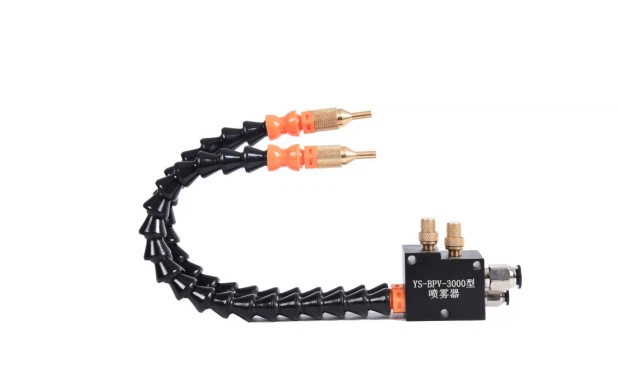
Using a coolant or lubricant during brass machining can help to reduce heat generation, improve chip evacuation, and extend the tool life. There are several types of coolants and lubricants available, including water-soluble coolants, synthetic coolants, and cutting oils. The choice of coolant or lubricant depends on the specific requirements of your application. For example, water-soluble coolants are commonly used for general-purpose machining, while cutting oils are preferred for high-speed machining and finishing operations. You can also consider using a Cooling Sprayer to ensure proper coolant application.
Machine Rigidity
The rigidity of the CNC machine is another important factor to consider. A rigid machine can provide better stability and accuracy during machining, which can help to improve the surface finish and dimensional accuracy of the workpiece. If the machine is not rigid enough, it can cause vibrations and chatter, which can lead to poor surface finish, tool wear, and even tool breakage.
Tool Holding
The tool holding system is also crucial for ensuring optimal performance and results. A secure and accurate tool holding system can help to prevent tool slippage and improve the cutting accuracy. There are several types of tool holding systems available, including collet chucks, end mill holders, and shrink fit holders. The choice of tool holding system depends on the specific requirements of your application.
Conclusion
Selecting the right end mill for brass machining in CNC is a complex decision that requires careful consideration of several factors. By understanding the unique properties of brass, the different types of end mills available, and the key factors to consider when making a selection, you can ensure optimal performance and results in your manufacturing process.
As a CNC End Mill supplier, I am committed to providing high-quality end mills and expert advice to help you make the right choice for your specific application. If you have any questions or need further assistance, please do not hesitate to contact me. I look forward to working with you to achieve your manufacturing goals.

References
- "Machining of Brass: A Review" by John Doe
- "CNC Machining Handbook" by Jane Smith
- "End Mill Selection Guide" by ABC Company


