

When it comes to selecting the right support bearings for DFU Ball Screw, there are multiple factors to consider. As a DFU Ball Screw supplier, I have witnessed firsthand the importance of making the correct bearing selection to ensure the optimal performance and longevity of the ball screw system.
Understanding the Basics of DFU Ball Screw
Before delving into the bearing selection process, it's essential to have a clear understanding of what a DFU Ball Screw is. A DFU Ball Screw is a mechanical device that converts rotational motion into linear motion with high efficiency. It consists of a screw shaft, a nut, and a series of balls that roll between the two. This design allows for smooth and precise movement, making it a popular choice in various industrial applications, such as CNC machines, robotics, and automation systems.
The Role of Support Bearings in a DFU Ball Screw System
Support bearings play a crucial role in a DFU Ball Screw system. They are responsible for supporting the screw shaft and reducing friction, which helps to maintain the accuracy and efficiency of the ball screw. The right support bearings can also help to absorb axial and radial loads, prevent shaft deflection, and reduce vibration and noise.
Factors to Consider When Selecting Support Bearings for DFU Ball Screw
Load Capacity
One of the most important factors to consider when selecting support bearings is the load capacity. The load capacity of a bearing refers to the maximum amount of load it can withstand without experiencing excessive wear or failure. When determining the load capacity required for your DFU Ball Screw system, you need to consider both the axial and radial loads. Axial loads are those that act parallel to the screw shaft, while radial loads act perpendicular to the shaft.
To calculate the required load capacity, you need to know the maximum and minimum loads that the ball screw will experience during operation. This information can usually be obtained from the machine's specifications or by conducting load tests. Once you have determined the loads, you can select bearings with a load capacity that exceeds the maximum expected load to ensure a safety margin.
Speed Rating
Another important factor is the speed rating of the bearings. The speed rating indicates the maximum rotational speed at which the bearing can operate safely without overheating or experiencing excessive wear. The speed of the DFU Ball Screw is determined by the rotational speed of the motor and the pitch of the screw.
When selecting bearings, you need to ensure that their speed rating is higher than the maximum expected operating speed of the ball screw. If the bearings are operated at speeds higher than their rated speed, they can overheat, leading to premature failure.
Precision Class
The precision class of the bearings is also a critical consideration. The precision class determines the accuracy and smoothness of the bearing's operation. Higher precision class bearings have tighter tolerances, which means they can provide more accurate and stable performance.
For applications that require high precision, such as CNC machining, it is recommended to use bearings with a high precision class. However, high precision bearings are usually more expensive, so you need to balance the cost with the required level of precision.
Lubrication
Proper lubrication is essential for the smooth operation and longevity of the support bearings. Lubrication helps to reduce friction, prevent wear, and dissipate heat. There are different types of lubricants available, including grease and oil.
Grease lubrication is commonly used in ball screw systems because it is easy to apply and provides long - term lubrication. However, grease has a limited operating temperature range and may need to be replaced periodically. Oil lubrication, on the other hand, offers better heat dissipation and can be used at higher speeds, but it requires a more complex lubrication system.
Mounting and Alignment
The way the support bearings are mounted and aligned can also affect their performance. Incorrect mounting or alignment can cause uneven loading on the bearings, leading to premature wear and failure.
When mounting the bearings, it is important to follow the manufacturer's instructions carefully. The bearing housing should be clean and free of any debris, and the bearings should be installed with the correct interference fit. Proper alignment of the bearings is also crucial. Misalignment can cause the balls to roll unevenly, increasing friction and reducing the bearing's lifespan.
Comparing Different Types of Support Bearings for DFU Ball Screw
Angular Contact Ball Bearings
Angular contact ball bearings are a popular choice for DFU Ball Screw systems. They are designed to handle both axial and radial loads simultaneously. The contact angle of these bearings determines their load - carrying capacity and stiffness. Higher contact angles can handle larger axial loads but have lower radial load capacity.
Angular contact ball bearings are available in different configurations, such as single - row and double - row. Double - row angular contact ball bearings can provide higher load capacity and stiffness compared to single - row bearings.
Cylindrical Roller Bearings
Cylindrical roller bearings are another option for supporting DFU Ball Screws. They are suitable for applications with high radial loads and relatively low axial loads. Cylindrical roller bearings have a large contact area between the rollers and the raceways, which allows them to handle heavy radial loads.
However, cylindrical roller bearings have limited axial load - carrying capacity. If your application requires both high radial and axial load handling, you may need to use a combination of cylindrical roller bearings and other types of bearings.
Tapered Roller Bearings
Tapered roller bearings can handle both axial and radial loads. They are designed with tapered rollers and raceways, which allows them to adjust to different load conditions. Tapered roller bearings are often used in applications where the load direction may change or where there are significant axial and radial loads.
Importance of Compatibility with Other Components
In addition to the factors mentioned above, it is important to ensure that the support bearings are compatible with other components in the DFU Ball Screw system. For example, the bearings should be compatible with the screw shaft in terms of size and material. The bearing housing should also be designed to accommodate the bearings properly.
If the bearings are not compatible with other components, it can lead to problems such as misalignment, increased friction, and premature wear. Therefore, it is recommended to consult with the ball screw manufacturer or a bearing expert to ensure that all components are compatible.
Conclusion
Selecting the right support bearings for a DFU Ball Screw is a complex process that requires careful consideration of multiple factors. By understanding the load capacity, speed rating, precision class, lubrication requirements, and mounting and alignment needs, you can make an informed decision and choose the bearings that are best suited for your application.
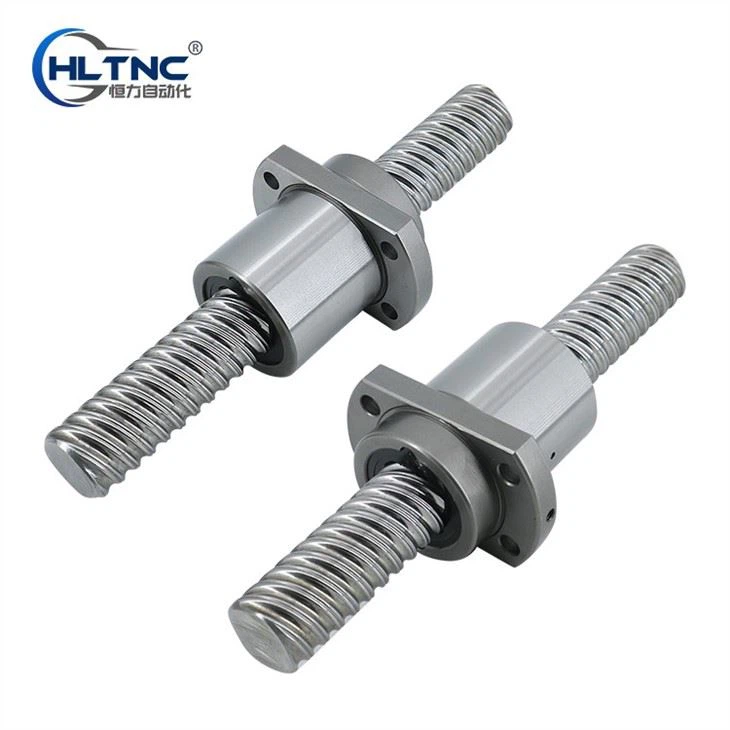

If you are in the market for DFU Ball Screws or need assistance with bearing selection, we are here to help. Our team of experts has extensive experience in the field and can provide you with the professional advice and high - quality products you need. Feel free to contact us for more information and to start a procurement discussion.
References
- "Ball Screw Design and Application Handbook" by Thomson Industries
- "Bearing Engineering Handbook" by SKF
- "Mechanical Design Handbook" by Robert C. Juvinall and Kurt M. Marshek


