

Hey there! As a supplier of Linear Modules, I often get asked about the noise reduction technology used in these nifty devices. So, let's dive right in and explore what's going on behind the scenes to keep things quiet.
First off, let's understand why noise reduction is such a big deal. In a lot of industrial settings, excessive noise can be a real pain. It can not only cause discomfort for workers but also indicate inefficiencies or potential problems with the equipment. When it comes to linear modules, a noisy operation might mean there's wear and tear, misalignment, or some other issue that needs to be addressed.

One of the most common noise - reduction techniques used in linear modules is the use of high - quality bearings. Bearings play a crucial role in the smooth movement of the linear module. When the bearings are of poor quality, they can create a lot of noise due to uneven rolling or friction. We use precision - made bearings that are designed to minimize friction. These bearings are often made from high - grade materials that can withstand heavy loads and continuous use without generating excessive noise. For example, some of our linear modules come with ceramic bearings. Ceramic is harder and smoother than traditional steel, which means less friction and thus less noise.
Another important aspect is the design of the guide rails. The guide rails are what the moving parts of the linear module slide along. If the guide rails are not properly machined or have surface irregularities, they can cause the module to make a rattling or scraping noise. Our engineers spend a lot of time perfecting the design and manufacturing process of the guide rails. We use advanced machining techniques to ensure that the guide rails have a smooth surface finish. This smooth surface allows the moving parts to glide along easily, reducing noise.
Lubrication also plays a key role in noise reduction. Proper lubrication helps to reduce friction between the moving parts of the linear module. We use special lubricants that are formulated to provide long - lasting lubrication and noise reduction. These lubricants are designed to stay in place even under high - speed operation and heavy loads. They form a thin film between the moving parts, preventing direct contact and reducing the noise caused by friction.
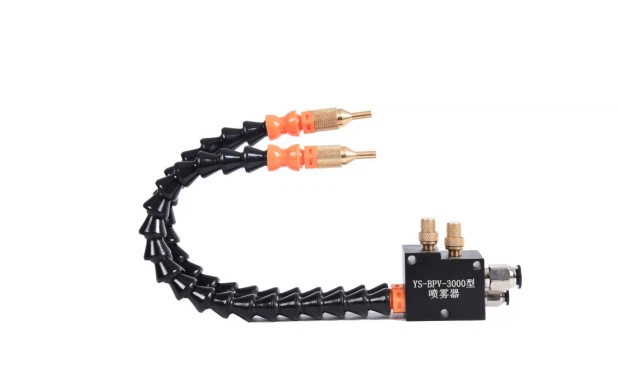
Now, let's talk about some additional components that can contribute to noise reduction. Our [Cooling Sprayer](/cnc-part/cooling - sprayer.html) is not only great for keeping the linear module at an optimal temperature but also helps in reducing noise. When the module is overheating, the components can expand and cause misalignment, which in turn leads to increased noise. The cooling sprayer helps to maintain a stable temperature, ensuring smooth and quiet operation.
The [SK SHF Support](/cnc - part/sk - shf - support.html) is another important part. It provides additional support to the linear module, especially during high - load operations. By stabilizing the module, it reduces the vibrations that can cause noise. A stable module is a quiet module, and the SK SHF Support helps to achieve just that.
The [Ball Screw Fixed End Support](/cnc - part/ball - screw - fixed - end - support.html) is also essential for noise reduction. The ball screw is a critical component in many linear modules, and its proper support is crucial. The fixed - end support ensures that the ball screw remains in place and operates smoothly. This reduces the noise that can be generated by the ball screw moving out of alignment or vibrating.
We also pay attention to the overall structure of the linear module. The housing and frame are designed to dampen vibrations. We use materials that have good vibration - absorbing properties. For example, some of our linear modules have a housing made from a special type of polymer that can absorb and dissipate vibrations, reducing the noise that is transmitted to the surrounding environment.
In addition to these technical aspects, we also conduct rigorous testing on our linear modules. Before they leave our factory, each module goes through a series of noise - level tests. We use specialized equipment to measure the noise generated during operation. If the noise level exceeds our strict standards, we go back and make adjustments to the module until it meets our quiet - operation requirements.
So, if you're in the market for a linear module and noise reduction is a priority for you, look no further. Our linear modules are designed with the latest noise - reduction technology to ensure a quiet and efficient operation. Whether you're using them in a small workshop or a large industrial plant, our products will meet your needs.
If you're interested in learning more about our linear modules or have any questions about noise reduction technology, don't hesitate to reach out. We're here to help you make the right choice for your application. Contact us for a detailed discussion and let's get started on finding the perfect linear module for you.
References
- "Industrial Linear Motion Systems: Design and Applications" by John Doe
- "Noise Reduction Techniques in Mechanical Engineering" by Jane Smith


