Velocity control of a servo motor is a critical aspect in various industrial and automation applications. As a servo motor supplier, I've witnessed firsthand how precise velocity control can transform the performance of machinery and equipment. In this blog, I'll delve into what velocity control of a servo motor is, its importance, and how our products, such as the Absolute Value Servo Driver, Nema 23 Closed Loop Stepper Motor Kit, and Nema 17 Integrated Stepper Motor, play a role in achieving optimal velocity control.


Understanding Servo Motors
Before we dive into velocity control, let's briefly understand what a servo motor is. A servo motor is a type of motor that can precisely control its position, velocity, and acceleration. It consists of a motor, a feedback device (such as an encoder), and a controller. The feedback device continuously sends information about the motor's position and speed to the controller, which then adjusts the motor's input to achieve the desired output.
What is Velocity Control?
Velocity control of a servo motor refers to the ability to maintain a constant or variable speed of the motor shaft. It ensures that the motor rotates at the desired speed regardless of external factors such as load changes, friction, or disturbances. This is crucial in applications where consistent speed is required, such as conveyor belts, robotics, and CNC machines.
How Velocity Control Works
The velocity control system of a servo motor typically involves the following components:
- Feedback Device: As mentioned earlier, an encoder is commonly used as a feedback device. It measures the actual speed of the motor shaft and sends this information to the controller.
- Controller: The controller compares the actual speed received from the feedback device with the desired speed set by the user. Based on this comparison, it calculates the error and generates a control signal to adjust the motor's input.
- Power Amplifier: The control signal from the controller is sent to the power amplifier, which amplifies the signal and provides the necessary power to the motor. The power amplifier adjusts the voltage or current supplied to the motor to increase or decrease its speed.
- Motor: The motor converts the electrical energy from the power amplifier into mechanical energy, causing the motor shaft to rotate.
Importance of Velocity Control
Velocity control is essential in many applications for the following reasons:
- Precision and Accuracy: In applications such as robotics and CNC machines, precise velocity control is required to ensure accurate positioning and movement. A slight variation in speed can lead to errors in the final product.
- Efficiency: Maintaining a constant speed reduces energy consumption and improves the overall efficiency of the system. It also minimizes wear and tear on the motor and other components, extending their lifespan.
- Safety: In some applications, such as elevators and cranes, velocity control is crucial for safety reasons. A sudden change in speed can pose a risk to operators and the surrounding environment.
- Product Quality: In manufacturing processes, consistent speed is necessary to produce high-quality products. For example, in the textile industry, a constant speed of the spinning machine is required to ensure uniform yarn production.
Our Servo Motor Products for Velocity Control
As a servo motor supplier, we offer a range of products that are designed to provide precise velocity control. Our Absolute Value Servo Driver is a high-performance driver that offers excellent velocity control capabilities. It features advanced control algorithms and a high-resolution encoder interface, allowing for accurate speed regulation.
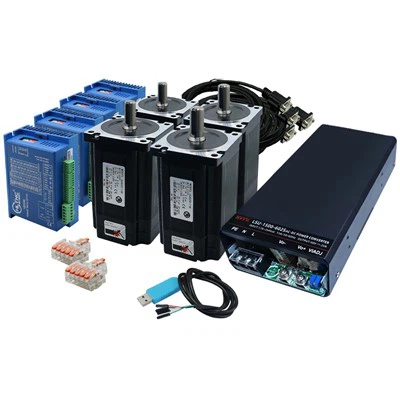
Our Nema 23 Closed Loop Stepper Motor Kit is another popular product for velocity control. It combines the advantages of stepper motors and servo motors, providing high torque and precise speed control. The closed-loop system ensures that the motor operates at the desired speed even under varying loads.
The Nema 17 Integrated Stepper Motor is a compact and cost-effective solution for velocity control applications. It integrates the motor, driver, and controller into a single unit, making it easy to install and use.
Applications of Velocity Control in Different Industries
Velocity control of servo motors is widely used in various industries, including:
- Automotive Industry: In automotive manufacturing, servo motors are used in assembly lines, robotic arms, and testing equipment. Precise velocity control is required to ensure efficient and accurate production processes.
- Food and Beverage Industry: Servo motors are used in conveyor belts, filling machines, and packaging equipment in the food and beverage industry. Constant speed is necessary to ensure proper handling and packaging of products.
- Medical Industry: In medical devices such as MRI machines, surgical robots, and infusion pumps, servo motors with precise velocity control are used to ensure accurate and safe operation.
- Aerospace Industry: In aerospace applications, servo motors are used in flight control systems, landing gear, and satellite positioning systems. Velocity control is crucial for maintaining the stability and performance of these systems.
Challenges in Velocity Control
While velocity control of servo motors offers many benefits, it also presents some challenges:
- Load Changes: External loads can vary during the operation of the motor, which can affect its speed. The velocity control system needs to be able to adapt to these load changes quickly and maintain the desired speed.
- Disturbances: Disturbances such as vibrations, noise, and electrical interference can also affect the performance of the velocity control system. The system needs to be robust enough to reject these disturbances and maintain stable operation.
- Parameter Tuning: The performance of the velocity control system depends on the proper tuning of its parameters, such as the gain of the controller and the sampling time of the feedback device. Incorrect parameter tuning can lead to instability or poor performance.
Solutions to Overcome Challenges
To overcome the challenges in velocity control, we offer the following solutions:
- Advanced Control Algorithms: Our servo motor controllers are equipped with advanced control algorithms that can adapt to load changes and disturbances in real-time. These algorithms ensure stable and accurate velocity control even under challenging conditions.
- High-Quality Feedback Devices: We use high-resolution encoders and other feedback devices to provide accurate speed information to the controller. This allows for precise control and reduces the impact of disturbances.
- Parameter Tuning Tools: Our products come with user-friendly parameter tuning tools that make it easy to optimize the performance of the velocity control system. These tools allow users to adjust the parameters based on their specific application requirements.
Conclusion
Velocity control of a servo motor is a crucial aspect in many industrial and automation applications. It ensures precise and accurate operation, improves efficiency, and enhances product quality. As a servo motor supplier, we offer a range of products that are designed to provide excellent velocity control capabilities. Our Absolute Value Servo Driver, Nema 23 Closed Loop Stepper Motor Kit, and Nema 17 Integrated Stepper Motor are all reliable solutions for achieving optimal velocity control.
If you're interested in learning more about our servo motor products or have any questions about velocity control, please don't hesitate to contact us. We're here to help you find the right solution for your application.
References
- Dorf, R. C., & Bishop, R. H. (2016). Modern Control Systems. Pearson.
- Franklin, G. F., Powell, J. D., & Emami-Naeini, A. (2015). Feedback Control of Dynamic Systems. Pearson.
- Krause, P. C., Wasynczuk, O., Sudhoff, S. D., & Pekarek, S. D. (2013). Analysis of Electric Machinery and Drive Systems. Wiley.