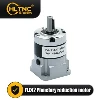
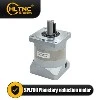
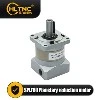
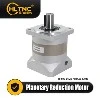
This article, written by Lishui City Hengli Automation Technology Co.,LTD based on over ten years of R&D and manufacturing experience, outlines the fundamentals and practical techniques for gearbox selection, helping you easily choose the most suitable gearbox motor.
Note: Focus on Chapter 6.
I. What is a Gearbox?
A gearbox is a core device in the mechanical transmission system. Its main function is to reduce the output speed of the motor and increase the output torque, so as to meet the actual working needs of the equipment and ensure stable and reliable operation.
II. What Types of Gearboxes Are There?
Common types of gearboxes mainly include:
Helical Gearbox
Harmonic Gearbox
Spur Gearbox
III.What Are the Advantages and Disadvantages of Each Type of Gearbox?
|
Gearbox Type |
Advantages |
Disadvantages |
|
Planetary Gearbox |
High torque, high transmission efficiency (0.95-0.97), compact structure |
Relatively high cost |
|
Helical Gearbox |
Low operating noise, suitable for high-speed scenarios, stable transmission |
Slightly larger space occupation than planetary gearboxes |
|
Worm Gearbox |
Self-locking function available, low cost |
Relatively low transmission efficiency |
|
Harmonic Gearbox |
High precision, suitable for servo occasions |
Weak load-bearing capacity, suitable for light-load and high-precision scenarios |
|
Spur Gearbox |
Low cost, suitable for low-load scenarios |
Average precision and torque performance |
IV.What Are the Important Parameters of a Gearbox?
Three core types of parameters need to be paid attention to during selection, which directly affect the adaptability of gearbox motor selection:
Basic Performance Parameters
Reduction Ratio (Transmission Ratio)
Output Torque (Nm)
Output Speed (rpm)
Motor Power (kW)
Transmission Efficiency (η)
Safety Factor (Ks, usually 1.2–2.0)
Structural Parameters
Gearbox Type (e.g., orthogonal shaft, concentric shaft, etc.)
Output Shaft Type (solid shaft, hollow shaft, etc.)
Installation Method (foot mounting, flange mounting, etc.)
Environmental Adaptation Parameters
IP Protection Rating
Heat Dissipation Performance
Sealing Method

V. How to Select a Gearbox?
Follow the following 5 steps to efficiently complete the selection and ensure the product meets the requirements. Lishui City Hengli Automation Technology Co.,LTD recommends operating in strict accordance with this process:
Clarify Usage Requirements: Determine the output speed, torque, installation space, whether self-locking is required, working system (e.g., continuous S1, intermittent S5), and whether frequent forward and reverse rotation is needed.
Calculate the Reduction Ratio: Formula: Reduction Ratio = Rated Motor Speed ÷ Required Output Speed (Recommended suitable speed: 500-600rpm); Example: If the motor speed is 1500rpm and the equipment requires 100rpm, the reduction ratio = 15.
Calculate Output Torque: Formula: Output Torque T = 9550 × P ÷ n (P: Power in kW, n: Speed in rpm), then multiply by transmission efficiency η and safety factor Ks; Supplement: Stepper motor rated torque × reduction ratio × efficiency (worm gearbox is about 80%) <40Nm (taking NMRV40 as an example).
Match the Gearbox Model: Select the model according to the torque table, confirm whether the installation method matches, and whether functions such as brakes and special protection are needed.
Verify Service Life and Safety: Check whether the shaft diameter is suitable, bearing life, thermal power, etc. Additional verification is required for special environments (high temperature, dusty, etc.).

VI. What Are the Precautions for Gearbox Selection?
Working Condition Adaptation
for low-speed and high-torque, choose planetary or helical gearboxes;
for self-locking needs, choose worm gearboxes;
for high-precision servo occasions, choose harmonic or planetary gearboxes;
for cost-sensitive and low-load scenarios, choose worm or spur gearboxes;
for high-speed and low-noise scenarios, choose helical gearboxes;
for compact space scenarios, choose planetary or coaxial gearboxes.
Space Adaptation
Measure the dimensions of the installation position in advance to ensure the gearbox can be installed and is easy to maintain.
Load Matching
Clarify the load type (continuous, intermittent or impact load), and confirm the maximum torque and speed range that the gearbox can bear.
Lubrication and Sealing
Pay attention to the lubrication method (oil bath, splash, etc.) and sealing performance to prevent lubricating oil leakage and external impurities from entering.
Protection and Heat Dissipation
Select the appropriate IP protection rating according to the working environment (dusty, humid, etc.), and ensure the heat dissipation system meets the requirements of high-temperature working conditions.
Maintenance and Cost
Choose brands that provide complete user manuals (including installation, operation, and troubleshooting), and comprehensively compare product prices, quality, and performance to improve the cost-effectiveness of selection.

Conclusion
We hope this gearbox selection Q&A guide (Chinese-English bilingual) can help you quickly understand the core logic of gearbox motor selection and select products that meet your specific needs. If you have specific selection requirements, please feel free to contact Lishui City Hengli Automation Technology Co.,LTD for professional technical support and customized solutions.
Email: admin@hengli-hltnc.com
Whatsapp: +86 13884328311