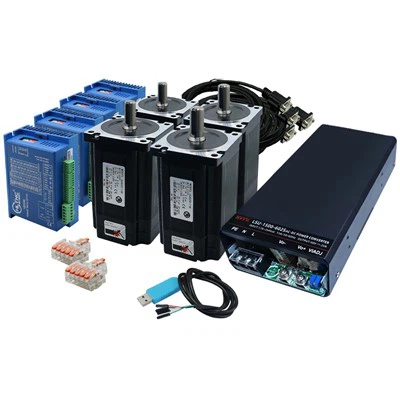
Hey there! As a 4th Axis supplier, I often get asked if a 4th Axis can be used for machining irregular - shaped parts. Well, let me tell you, the answer is a resounding yes! In this blog, I'm gonna break down how a 4th Axis can be a game - changer when it comes to machining those tricky, irregular - shaped components.
First off, let's understand what a 4th Axis is. In the world of CNC machining, we're usually familiar with the X, Y, and Z axes. These axes allow the cutting tool to move in three - dimensional space. But a 4th Axis adds an extra degree of freedom, typically a rotational movement. This rotation can be around the X, Y, or Z axis, depending on the setup.
When it comes to irregular - shaped parts, traditional 3 - axis machining can hit some roadblocks. Irregular shapes often have complex geometries with undercuts, compound angles, and non - linear surfaces. With just 3 axes, you might have to re - position the part multiple times to access different areas. This not only takes a lot of time but also increases the chances of misalignment, which can lead to inaccurate machining.
A 4th Axis solves these problems. With its rotational ability, it can bring different sides of the irregular - shaped part into the cutting area without the need for constant re - positioning. For example, let's say you're machining a part with a series of holes at different angles around a cylindrical surface. With a 3 - axis machine, you'd have to manually rotate the part and secure it in each new position. But with a 4th Axis, the machine can automatically rotate the part to the correct angle, making the process much faster and more precise.
One of the key advantages of using a 4th Axis for irregular - shaped parts is improved accuracy. Since the part can be held in a single setup for multiple machining operations, there's less room for error. The machine can maintain a consistent reference point throughout the process, ensuring that all features of the part are machined to the exact specifications. This is crucial, especially for industries like aerospace and medical, where precision is non - negotiable.
Another benefit is increased efficiency. As I mentioned earlier, the 4th Axis reduces the need for re - positioning the part. This means less time spent on setup and more time spent on actual machining. In a production environment, this can lead to significant cost savings. You can produce more parts in less time, which ultimately boosts your bottom line.
Now, let's talk about some of the components that work in tandem with the 4th Axis to make all this possible. One important part is the T Lead Screw. The T Lead Screw is responsible for converting rotational motion into linear motion. In the context of a 4th Axis, it helps in precisely controlling the movement of the rotating table. A high - quality T Lead Screw ensures smooth and accurate rotation, which is essential for machining irregular - shaped parts.
The Angular Contact Bearing 700Zac is another crucial component. These bearings are designed to handle both radial and axial loads. In a 4th Axis setup, they support the rotating shaft, allowing it to spin smoothly. The 700Zac bearing's design helps in reducing friction and wear, which extends the lifespan of the 4th Axis and improves its overall performance.
The Electric Oil Pump also plays a vital role. It's used to lubricate the moving parts of the 4th Axis, such as the bearings and lead screws. Proper lubrication is necessary to prevent overheating and reduce friction, which can cause premature wear and tear. An electric oil pump ensures that the lubricant is delivered consistently and in the right amount, keeping the 4th Axis running smoothly.
Of course, using a 4th Axis for machining irregular - shaped parts isn't without its challenges. Programming can be more complex compared to 3 - axis machining. You need to have a good understanding of the 4th Axis's capabilities and how to use them effectively. But with the right training and experience, these challenges can be overcome.
In conclusion, a 4th Axis is an excellent tool for machining irregular - shaped parts. It offers improved accuracy, increased efficiency, and the ability to handle complex geometries that would be difficult or impossible to machine with a 3 - axis setup. If you're in the business of manufacturing irregular - shaped components, investing in a 4th Axis can give you a competitive edge.


If you're interested in learning more about our 4th Axis products or have any questions about using them for your specific machining needs, don't hesitate to reach out. We're here to help you find the best solutions for your business. Let's start a conversation and see how we can work together to take your machining operations to the next level.
References
- "CNC Machining Handbook"
- Industry - specific technical manuals on 4th Axis applications
- Research papers on advanced machining technologies