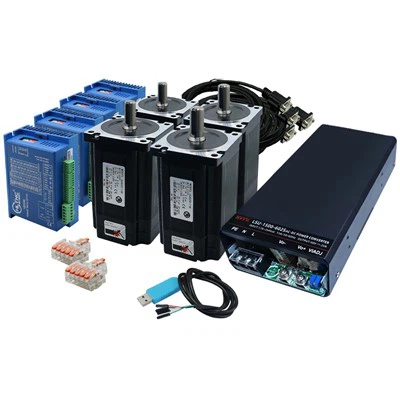
Hey there! As a supplier of CNC parts, I'm super stoked to take you on a journey through how these awesome parts are made. CNC, which stands for Computer Numerical Control, has revolutionized the manufacturing industry. It allows for precise, efficient, and repeatable production of parts that are used in all sorts of applications, from small consumer gadgets to large industrial machinery.
1. Design Phase
The whole process kicks off with the design phase. This is where the magic starts. A team of designers, armed with CAD (Computer-Aided Design) software, sit down to create a detailed digital model of the CNC part. They take into account all the specifications, like dimensions, tolerances, and surface finishes. It's like creating a blueprint for a building, but for a tiny part.


The design has to be spot - on because any mistake at this stage can lead to a faulty part later on. Once the design is complete, it's reviewed by a team of engineers. They check for things like structural integrity and manufacturability. If everything looks good, the design is ready to move on to the next step.
2. Material Selection
Choosing the right material is crucial. There are so many options out there, like metals (aluminum, steel, brass), plastics, and composites. Each material has its own properties, such as strength, durability, and heat resistance.
For example, if the part needs to be lightweight and corrosion - resistant, aluminum might be a great choice. On the other hand, if it needs to withstand high stress, steel could be the way to go. We also consider the cost of the material, as it can have a big impact on the final price of the part.
3. Programming the CNC Machine
Once we have the design and the material, it's time to program the CNC machine. This is where the computer comes in. We use CAM (Computer - Aided Manufacturing) software to convert the CAD design into a set of instructions that the CNC machine can understand.
The programmer has to specify things like the cutting speed, feed rate, and tool path. It's like teaching a robot how to do a specific job. The program is then loaded into the CNC machine's controller, which acts as the brain of the operation.
4. Setting Up the CNC Machine
Before we start cutting, we need to set up the CNC machine. This involves mounting the workpiece (the raw material) securely on the machine's table. We use clamps or vises to hold it in place, making sure it won't move during the machining process.
Next, we install the appropriate cutting tools. There are different types of tools for different operations, like drills, end mills, and lathe tools. Each tool is carefully selected based on the design requirements of the part. We also have to set the tool offsets, which ensure that the tool cuts at the right position on the workpiece.
5. Machining Process
Now, it's showtime! The CNC machine starts its work based on the programmed instructions. There are several machining operations that can be performed, such as milling, turning, drilling, and grinding.
Milling
Milling is a common operation where a rotating cutting tool removes material from the workpiece. It can be used to create flat surfaces, slots, and pockets. For example, if we're making a Cooling Sprayer Cooling Sprayer, milling might be used to create the housing and the internal channels.
Turning
Turning is used to create cylindrical parts. The workpiece is rotated while a cutting tool moves along its axis to remove material. This is often used for making shafts and bolts. A Rail - Mounted Switching Power Supply Rail - Mounted Switching Power Supply might have some turned parts in its construction.
Drilling
Drilling is simply making holes in the workpiece. We use drill bits of different sizes to create holes of the required diameter. This is an essential operation for many parts, as holes are often needed for mounting or for passing wires through.
Grinding
Grinding is used to achieve a very smooth surface finish. It involves using an abrasive wheel to remove a small amount of material from the workpiece. A Linear Rail Bearing Block Linear Rail Bearing Block might require grinding to ensure a precise fit and smooth movement.
6. Quality Control
Throughout the machining process, quality control is essential. We use various measuring tools, like calipers, micrometers, and coordinate measuring machines (CMMs), to check the dimensions of the part. The part has to meet the specified tolerances. If it's out of tolerance, we might have to adjust the machine settings or make some corrections.
We also inspect the surface finish of the part. Any scratches, burrs, or other defects can affect the performance of the part. If we find any issues, we use deburring tools to remove burrs and polishing tools to improve the surface finish.
7. Finishing Operations
After the machining is done, the part might need some finishing operations. This could include things like heat treatment, plating, or painting.
Heat treatment is used to improve the mechanical properties of the part, such as hardness and strength. Plating, like chrome plating or nickel plating, can provide corrosion resistance and a nice appearance. Painting can also be used for protection and aesthetics.
8. Packaging and Shipping
Once the part has passed all the quality checks and finishing operations, it's time to package it. We use appropriate packaging materials to protect the part during shipping. This could include bubble wrap, foam inserts, or cardboard boxes.
We then ship the part to our customers. We work with reliable shipping partners to ensure that the part arrives on time and in good condition.
Why Choose Us as Your CNC Part Supplier
We've been in the business of supplying CNC parts for a long time. We have a team of experienced designers, programmers, and machinists who are dedicated to producing high - quality parts. We use the latest CNC machines and technology to ensure precision and efficiency.
Our quality control process is top - notch, and we offer competitive prices. Whether you need a single prototype or a large production run, we can handle it. We also provide excellent customer service, and we're always ready to answer your questions and address your concerns.
If you're in the market for CNC parts, don't hesitate to reach out to us for a quote. We'd love to work with you and help you bring your projects to life.
References
- "CNC Machining Handbook" by Mark Condon
- "Manufacturing Engineering and Technology" by Serope Kalpakjian and Steven Schmid