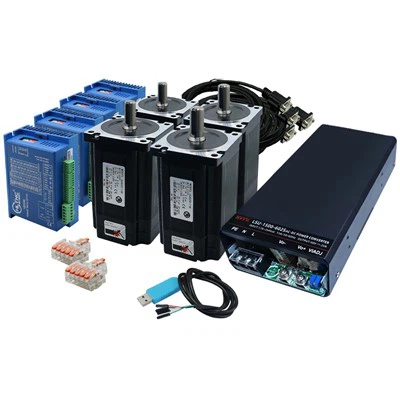
As a seasoned provider in the Motor and Driver industry, I've witnessed firsthand the critical role that motor drivers play in ensuring the smooth and safe operation of various motor systems. One of the most common yet potentially catastrophic issues that can occur is reverse - polarity connection. In this blog, I'll delve into how motor drivers prevent damage from such a dangerous situation.
Understanding Reverse - Polarity Connection
Reverse - polarity connection happens when the positive and negative terminals of a power source are connected in the wrong way to the motor driver. This can occur due to human error during installation, incorrect wiring diagrams, or even electrical system malfunctions. When reverse - polarity occurs, it can lead to a surge of current in the wrong direction, which may cause overheating, component failure, and in severe cases, permanent damage to the motor driver and the connected motor.
Built - in Protection Circuits
Most modern motor drivers are equipped with built - in protection circuits to safeguard against reverse - polarity connection. These circuits act as a first line of defense, preventing the flow of current in the wrong direction.
Diode - Based Protection
One of the simplest and most widely used methods is the use of diodes. Diodes are semiconductor devices that allow current to flow in only one direction. In a motor driver, a diode can be placed in series with the power input. When the correct polarity is applied, the diode conducts current, allowing the power to reach the motor driver. However, if reverse - polarity occurs, the diode blocks the current flow, preventing damage to the driver.
For example, a Schottky diode is often used due to its low forward voltage drop. This means that when the correct polarity is applied, there is minimal power loss across the diode, ensuring efficient operation of the motor driver.
MOSFET - Based Protection
Another approach is the use of Metal - Oxide - Semiconductor Field - Effect Transistors (MOSFETs). MOSFETs can be configured to act as a switch that allows current to flow in the correct direction and blocks it in the reverse direction. Compared to diodes, MOSFETs can handle higher currents and have lower power losses when conducting.
In a MOSFET - based reverse - polarity protection circuit, a control circuit monitors the input voltage polarity. When the correct polarity is detected, the MOSFET is turned on, allowing current to flow. If reverse - polarity is detected, the MOSFET is turned off, preventing the current from flowing through the motor driver.
Fuses and Circuit Breakers
In addition to the protection circuits, fuses and circuit breakers are also commonly used in motor drivers to prevent damage from reverse - polarity connection.
Fuses
A fuse is a simple device that contains a metal wire or strip that melts when too much current flows through it. In a motor driver, a fuse can be placed in the power input circuit. If reverse - polarity occurs and a large current surge is generated, the fuse will blow, breaking the circuit and preventing further damage to the driver and the motor.

Fuses come in different ratings, and the appropriate fuse rating should be selected based on the maximum current that the motor driver is expected to handle.
Circuit Breakers
Circuit breakers are similar to fuses in that they are designed to interrupt the circuit when an overcurrent condition occurs. However, unlike fuses, circuit breakers can be reset after they have tripped. This makes them more convenient for applications where frequent overcurrent events may occur.
In a motor driver, a circuit breaker can be used to protect against reverse - polarity connection. When a large current surge due to reverse - polarity is detected, the circuit breaker will trip, opening the circuit and preventing damage. Once the reverse - polarity issue is corrected, the circuit breaker can be reset, allowing the motor driver to resume normal operation.
Monitoring and Diagnostic Systems
Many modern motor drivers are also equipped with monitoring and diagnostic systems that can detect reverse - polarity connection and take appropriate action.
Voltage Sensors
Voltage sensors can be used to monitor the input voltage polarity. These sensors can detect the voltage level and polarity at the power input of the motor driver. If reverse - polarity is detected, the sensor can send a signal to the control circuit of the motor driver.
The control circuit can then take several actions, such as shutting down the motor driver, activating an alarm, or providing a diagnostic message to the user. This allows for quick identification and correction of the reverse - polarity issue.
Current Sensors
Current sensors can also be used to detect abnormal current flow caused by reverse - polarity connection. When reverse - polarity occurs, there is often a significant increase in current. A current sensor can detect this increase and send a signal to the control circuit.
The control circuit can then take appropriate action, such as shutting down the motor driver or activating a protection mechanism to prevent damage.
Real - World Applications
Let's take a look at some real - world applications where motor drivers' reverse - polarity protection is crucial.
Industrial Automation
In industrial automation systems, motor drivers are used to control various types of motors, such as servo motors and stepper motors. These motors are often used in critical processes, and any damage to the motor driver can lead to production downtime and significant financial losses.
For example, in a robotic arm used in a manufacturing plant, the motor driver that controls the movement of the arm must be protected against reverse - polarity connection. If reverse - polarity occurs, it could cause the robotic arm to malfunction, leading to product defects or even accidents.
Electric Vehicles
In electric vehicles, motor drivers are used to control the electric motors that power the vehicle. Reverse - polarity connection in an electric vehicle's motor driver can not only damage the driver but also pose a safety risk to the passengers.
For instance, if the motor driver in an electric car's powertrain is damaged due to reverse - polarity, it could lead to a sudden loss of power while the vehicle is in motion, which is extremely dangerous.
Our Product Offerings
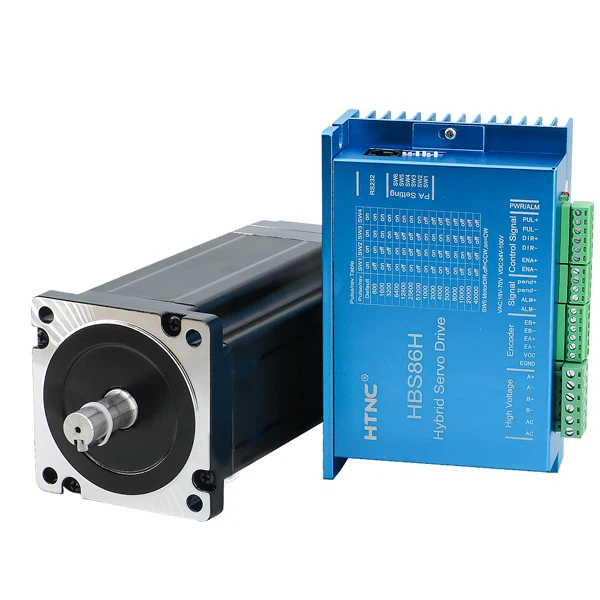
As a Motor and Driver supplier, we offer a wide range of high - quality motor drivers with advanced reverse - polarity protection features. Our Nema 34 Closed Loop motor drivers are designed for high - torque applications and come with robust protection circuits to prevent damage from reverse - polarity connection.
We also provide Motor Shielded Cable to ensure reliable power transmission to the motor drivers. The shielding helps to reduce electromagnetic interference and protects the cable from damage.
In addition, our Integrated Driven Motor combines the motor and the driver into a single unit, providing a compact and efficient solution. These integrated units also feature advanced reverse - polarity protection to ensure long - term reliability.
Conclusion
Reverse - polarity connection is a serious issue that can cause significant damage to motor drivers and the connected motors. However, with the use of built - in protection circuits, fuses, circuit breakers, monitoring, and diagnostic systems, motor drivers can effectively prevent damage from reverse - polarity connection.
As a Motor and Driver supplier, we are committed to providing our customers with high - quality products that are reliable and safe. If you are in the market for motor drivers or related products, we invite you to contact us for a procurement discussion. Our team of experts will be happy to assist you in finding the right solutions for your specific needs.
References
- Dorf, R. C., & Bishop, R. H. (2013). Modern Control Systems. Pearson.
- Mohan, N., Undeland, T. M., & Robbins, W. P. (2012). Power Electronics: Converters, Applications, and Design. Wiley.
- Milunović, D. (2018). Electric Machines and Drives: Fundamentals, Types, and Applications. CRC Press.