Hey there! As a supplier of SBR Support Rails, I often get asked about the friction coefficient of these rails. So, I thought I'd write this blog to shed some light on this topic.
First off, let's understand what the friction coefficient is. In simple terms, it's a measure of how much two surfaces resist sliding against each other. When it comes to SBR Support Rails, the friction coefficient plays a crucial role in determining their performance.
The friction coefficient of SBR Support Rails can vary depending on several factors. One of the main factors is the surface finish of the rail. A smoother surface generally results in a lower friction coefficient. This is because there are fewer irregularities for the moving parts to catch on. For example, if the rail has been precision - machined to have a mirror - like finish, the friction between the rail and the sliding block will be relatively low.
Another important factor is the material of the sliding element that moves along the SBR Support Rail. Different materials have different frictional properties. For instance, if the sliding block is made of a self - lubricating polymer, it might have a lower friction coefficient compared to a metal block. The self - lubricating properties of the polymer reduce the amount of contact friction between the block and the rail.
The load applied to the SBR Support Rail also affects the friction coefficient. As the load increases, the contact pressure between the rail and the sliding element goes up. This can lead to an increase in the friction coefficient. However, modern SBR Support Rails are designed to handle a wide range of loads while maintaining relatively stable friction characteristics.
Now, you might be wondering how we measure the friction coefficient of SBR Support Rails. Well, there are several testing methods available. One common method is to use a friction testing machine. This machine applies a known force to the sliding element and measures the force required to keep it moving at a constant speed along the rail. By dividing the force required to move the element by the normal force (the force pressing the element against the rail), we can calculate the friction coefficient.
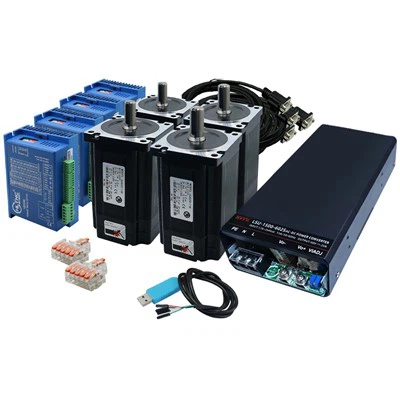
In real - world applications, the friction coefficient of SBR Support Rails is a critical parameter. For example, in CNC Spindle MOTOR systems, where precision and smooth movement are essential, a low and stable friction coefficient is highly desirable. A high friction coefficient in these systems can lead to increased energy consumption, premature wear of the components, and reduced accuracy of the machining operations.

Similarly, in HGR Linear Guide applications, the friction coefficient of the SBR Support Rail impacts the overall performance of the linear motion system. A lower friction coefficient allows for faster and more efficient movement of the linear guide, which is crucial in high - speed automation and robotics applications.
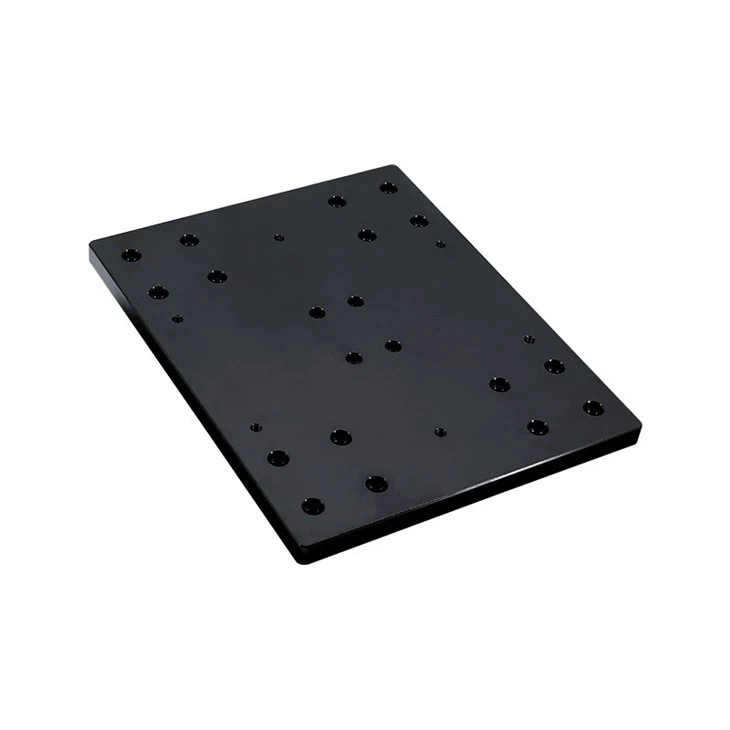
The Black Aluminium Plate can also be used in conjunction with SBR Support Rails in some setups. The surface properties of the black aluminium plate can interact with the SBR Support Rail, and understanding the friction coefficient between them is important for ensuring proper functioning of the overall system.
As a supplier of SBR Support Rails, we take great care in ensuring that our products have the optimal friction coefficient for different applications. We use advanced manufacturing techniques and quality control measures to produce rails with consistent and reliable friction characteristics. Our team of experts is always available to provide technical support and advice on choosing the right SBR Support Rail for your specific needs.
If you're in the market for SBR Support Rails and want to know more about their friction coefficient or other technical details, don't hesitate to get in touch. Whether you're involved in a small DIY project or a large - scale industrial application, we can offer you the right solutions. Our SBR Support Rails are designed to meet high - quality standards and provide long - lasting performance.
Contact us to start a discussion about your requirements, and let's see how our SBR Support Rails can enhance your projects. We're looking forward to working with you and helping you achieve the best results.
References
- "Engineering Tribology" by Stachowiak and Batchelor
- "Mechanical Design Handbook" by Robert C. Juvinall and Kurt M. Marshek