

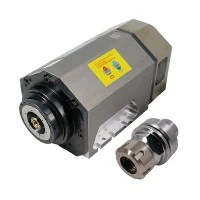


CNC Spindle MOTOR
Why Choose Us
Quality control
We have professional personnel to monitor the production process, inspect the products and ensure that the final product meets the required quality level standards, guidelines and specifications.
High quality
Our products are manufactured or executed to very high standards, using the finest materials and manufacturing processes.
One stop solution
From the begining inquiry and throughout the entire process until you receive the goods. we are dedicated to supporting you every step of the way.
24h online service
We try and respond to all concerns within 24 hours and our teams are always at your disposal in case of any emergencies.
A CNC spindle motor is an electric motor that powers the spindle of a Computer Numerical Control (CNC) machine. The spindle is the component that holds and rotates the cutting tool, such as an end mill or drill bit, allowing it to perform various machining operations on materials like metal, wood, plastic, or composites.


How Do Cnc Spindle Motors Work?
CNC spindle motors are electric motors with a specific design for computer numerical controlled (CNC) machinery. These motors can achieve high speeds and torque levels while still maintaining a high degree of accuracy. This performance works through precision bearings and a specially designed rotor.
The rotor is the part of the motor that spins, and precision bearings support it at either end. The stator is the stationary part of the motor that houses the windings. The windings create the magnetic field that interacts with the rotor to develop torque.
The interaction between the stator and rotor allows the motor to reach such high speeds while maintaining a high degree of accuracy. They send electrical signals to the windings to control the amount of torque generated. The strength of these signals determines the speed and torque of the motor. A CNC spindle motor can achieve high speeds because they have a higher number of poles than other types of electric motors.
They determine the number of poles by the number of winding pairs used in the stator. The more winding pairs you see, the higher the speed you can achieve. For example, the average car engine has four poles. CNC spindle motors usually have six or eight poles. This allows them to achieve speeds of up to 20,000 revolutions per minute.
Types of CNC Spindle MOTOR


Brushless DC Motors (BLDC): BLDC motors are the most prevalent type of spindle motor in CNC machinery. They operate without brushes, which reduces wear and tear, leading to longer life and maintenance-free operation. BLDC motors provide high efficiency, low noise, and excellent speed control. They are capable of delivering high torque at low speeds and can reach high RPMs, making them suitable for a wide range of machining operations.
Stepper Motors: Stepper motors are popular for their simplicity and cost-effectiveness. They move in discrete steps and are easy to interface with control systems. However, they generally have less torque compared to BLDC motors and can be less efficient, especially at higher speeds. They are often used in applications that require precise positioning rather than high-speed continuous operation.
AC Induction Motors: AC induction motors are known for their robustness and ability to handle heavy loads. They are less commonly used in CNC spindles due to their lower speed control precision compared to BLDC motors. However, they are still found in some applications where high starting torque and durability are required.
Servo Motors: Servo motors are similar to stepper motors in that they provide precise positioning and control. Unlike stepper motors, servos operate continuously and are capable of very high speeds and accelerations. They are equipped with feedback systems (such as encoders) that allow the CNC controller to precisely monitor and adjust their position, speed, and torque. This makes servo motors suitable for demanding applications that require both high speed and high precision.
Advantages Of Cnc Spindle Motor
Increased Speed
CNC spindle motors can reach up to 60,000 RPM speeds, much higher than most traditional electric motors. This increased speed can lead to increased productivity and improved surface finish on machined parts.
Increased Torque
CNC spindle motors also have increased torque output compared to traditional electric motors. This increased torque allows heavier cuts to work without sacrificing speed or accuracy. It will also allow for a wider range of materials to be machined.
Decreased Vibration
CNC spindle motors also tend to produce less vibration than traditional electric motors. This decrease in vibration is due to the increased precision of the bearings and rotor design. Less vibration means improved surface finish and increased accuracy.
Improved Reliability
CNC spindle motors work well for use in demanding industrial applications. As such, they need to be rugged and reliable. This improved reliability can lead to decreased downtime and increased productivity. The last thing you want is your machine to be down because of a failed motor.
Importance Of Cnc Spindle Motor
Rotation and Control
CNC spindle motors drive the rotation of cutting tools, allowing for precise and controlled material removal. Their speed and torque can be precisely adjusted, enabling efficient and accurate machining operations.
Versatility
CNC machines are used in a wide range of industries, such as metalworking, woodworking, and automotive. Spindle motors provide the versatility required to handle different materials and machining processes.
Productivity and Efficiency
CNC spindle motors are designed to deliver high-speed rotation and torque, facilitating faster material removal and reducing production time. This leads to increased productivity and enhanced efficiency.
Precision and Accuracy
CNC machines are known for their ability to achieve highly precise and accurate cuts. Spindle motors play a crucial role in maintaining the required precision during machining processes, ensuring dimensional accuracy in the final product.
Tool Change Capability
Some CNC machines feature ATC spindle motors, which allow for automatic tool changes. This feature eliminates the need for manual tool swapping, saving time and improving workflow efficiency.
What safety precautions should I follow when using a CNC spindle motor?
Personal Protective Equipment (PPE): Operators should always wear appropriate PPE, including safety glasses or a face shield to protect against flying debris, ear protection to guard against loud noise, and gloves to protect hands from sharp edges and hot surfaces.
Machine Guarding: Ensure that all guards are in place and secure before operating the CNC machine. Guards are designed to prevent contact with moving parts, including the spindle.
Lockout/Tagout (LOTO) Procedures: Before performing maintenance or cleaning, follow LOTO procedures to disable the spindle motor and disconnect power to prevent accidental start-up.
Proper Tooling: Use the correct tools and fixtures for the job. Tools that are too small, loose, or improperly balanced can cause excessive vibration, leading to tool breakage and potential injury.
Start-up Procedure: Always start the spindle motor at a low speed and gradually increase to the desired speed to check for any unusual vibration or sounds. This also allows the operator to safely stop the machine if there is a problem.
Clear Work Area: Keep the area around the CNC machine clear of clutter, tools, and other materials that could pose a tripping hazard or interfere with the operation of the machine.
Training and Education: Ensure that operators are properly trained on the use of the CNC machine and the spindle motor. Understanding the equipment's capabilities and limitations is crucial for safe operation.
Emergency Stop: Know where the emergency stop button is located and how to use it. In case of an emergency, this button should be readily accessible to immediately halt all machine operations.
Regular Maintenance: Perform regular maintenance checks on the spindle motor and associated components to ensure they are functioning correctly and safely. This includes checking for proper lubrication, cleanliness, and wear.
Program Verification: Before running a new program or making changes to an existing one, verify the program to ensure that it will not cause the spindle to operate outside of safe parameters.
Maintenance Tips For Cnc Spindle Motor
Lubrication
Proper lubrication is vital for the smooth operation and longevity of a spindle motor. Follow the manufacturer's recommendations for lubrication intervals and types of lubricants to use. Some motors have sealed bearings that require no additional lubrication, while others may have accessible lubrication points. Ensure that the lubricant is applied correctly and in the recommended amounts. Over-lubrication can lead to increased heat generation and premature bearing failure, while under-lubrication can cause excessive friction and wear.
Belt or Drive System Maintenance
If the CNC machine employs a belt or drive system to transmit power from the spindle motor to the cutting tool or workpiece, regular inspection and maintenance are necessary. Check the belts for signs of wear, such as cracks, fraying, or stretching. Tension the belts according to the manufacturer's specifications to prevent slippage or excessive strain on the motor. If the machine uses gears or other drive mechanisms, inspect them for proper alignment, wear, or damage.
Cooling System Maintenance
Efficient cooling is crucial for the spindle motor's performance and longevity. If the motor has an air cooling system, regularly inspect and clean the cooling fins, air filters, and ducts to ensure proper airflow. Replace or clean air filters as needed to prevent dust and debris from clogging the cooling system. For liquid cooling systems, check coolant levels, inspect hoses and connections for leaks, and flush and replace the coolant as recommended by the manufacturer.
Vibration Analysis and Balancing
Excessive vibration can indicate issues with the spindle motor or its components. Regularly monitor and analyze vibration levels using specialized equipment. Excessive vibration can lead to reduced machining accuracy, premature wear, and increased stress on the motor. If necessary, perform dynamic balancing of the motor or its components to minimize vibration and ensure smooth operation.
Electrical System Inspection
Regularly inspect the electrical system of the CNC machine, including power supply connections, wiring, and control systems. Check for loose connections, damaged cables, or signs of overheating. Inspect electrical components such as capacitors, resistors, and contactors for signs of wear or damage. Ensure that the motor's electrical grounding is properly maintained to minimize the risk of electrical issues or malfunctions.
Professional Maintenance and Servicing
While regular maintenance tasks can be performed by operators, it is essential to schedule professional maintenance and servicing of the spindle motor at regular intervals. Professional technicians can conduct more in-depth inspections, perform specialized tests, and address any specific issues or concerns. They can also provide expert advice on maintenance practices and recommend any necessary repairs or replacements.
Process Of Cnc Spindle Motor
Programming: The first step is to create a program using CAM (Computer-Aided Manufacturing) software. This program contains instructions that tell the CNC machine what movements to make and at what speed. The program is then converted into G-code, a language that the CNC machine understands.
Tool Selection and Loading: Based on the material being machined and the operations being performed, the appropriate cutting tool is selected and loaded into the spindle. The tool must be properly balanced and secured in place.
Machine Setup: The CNC machine is set up with the workpiece attached to the table or fixture. The machine's zero point or reference point is established so that the program can be accurately executed.
Spindle Motor Activation: The spindle motor is activated, and the cutting tool begins to rotate at the specified speed. The speed is chosen based on the material being cut and the type of tool being used.
Machine Operation: The CNC machine follows the programmed instructions, moving the cutting tool in three-dimensional space to perform the desired operations, such as drilling, milling, or turning. The spindle motor maintains the necessary speed throughout the operation.
Monitoring and Adjustment: During operation, the machine is monitored to ensure that it is performing correctly. If necessary, adjustments can be made to the program or machine settings to optimize performance and quality.
Finishing Touches: Once the primary machining operations are complete, any finishing touches, such as deburring or polishing, may be performed. The spindle motor may be used to apply a cutting tool or abrasive material to achieve the desired finish.
Shutdown and Cleanup: After the machining process is complete, the machine is shut down, and the spindle motor is deactivated. The workpiece is removed from the machine, and any remaining chips or debris are cleaned up.
Maintenance and Inspection: Regular maintenance and inspection of the spindle motor and associated components are essential to ensure safe and efficient operation. This may include checking for proper lubrication, cleaning the motor and coolant system, and replacing worn or damaged parts.
Our Factory
Lishui Hengli Automation Technology Co., Ltd. was established on December 21, 2010. The company is located in Liandu District, Lishui City, Zhejiang Province. The company covers an area of 15 acres, with a processing and production workshop of 3,000 square meters and a warehouse of 2,000 square meters. Department, sales department (domestic trade, traditional foreign trade, cross-border e-commerce), finance department, human resources department. The company mainly produces and processes linear guides, ball screws, linear bearings, stepper motors, drives, servo motors, spindles, Inverter and other CNC series products, sales platforms include Alibaba International Station, AliExpress, Amazon, shopify, Taobao, Tmall, 1688, Jingdong and other e-commerce platforms. From 2020, the annual GDP will exceed 200 million RMB.


Products Description


FAQ
Q: What is a CNC spindle motor?
Q: How does a CNC spindle motor work?
Q: What are the main types of CNC spindle motors?
Q: What are the factors to consider when selecting a CNC spindle motor?
Q: What power requirements should I consider for a CNC spindle motor?
Q: How do I determine the speed range of a CNC spindle motor?
Q: What is torque, and why is it important for a CNC spindle motor?
Q: Are there any cooling requirements for a CNC spindle motor?
Q: What is the difference between air-cooled and liquid-cooled spindle motors?
Q: How can I minimize the noise level of a CNC spindle motor?
Q: Can I use any CNC spindle motor for my CNC machine?
Q: Are CNC spindle motors easy to install?
Q: How can I ensure the longevity and performance of a CNC spindle motor?
Q: Can I adjust the speed of a CNC spindle motor during operation?
Q: What safety precautions should I follow when using a CNC spindle motor?
Q: Can a CNC spindle motor be repaired if it malfunctions?
Q: Can a CNC spindle motor be used for other applications besides CNC machining?
Q: What are the advantages of a permanent magnet spindle motor?
Q: Can I upgrade the CNC spindle motor of my existing machine?
Q: Where can I buy a CNC spindle motor?
Hot Tags: cnc spindle motor, China cnc spindle motor manufacturers, suppliers, factory, mechanical linear slides, slide linear guide, 1500mm linear rail, star linear rails, linear slides for cnc, profile guide rail
Previous
SBR Support RailNext
HGR Linear GuideYou Might Also Like


Send Inquiry