Hey there! As a supplier of linear guides, I often get asked about the installation space requirements for these nifty components. In this blog, I'm gonna break down all the key factors you need to consider when it comes to setting up linear guides in your machinery.
First off, let's talk about what linear guides are. They're basically mechanical components that allow for smooth and precise linear motion. You'll find them in all sorts of applications, from CNC machines to robotics. And getting the installation space right is crucial for their proper functioning.
Overall Dimensions
The first thing to look at is the overall size of the linear guide itself. Different models come in various lengths, widths, and heights. You've got to make sure that the space you've got can accommodate the guide without any issues. For example, if you're using a longer linear guide, you need to have enough length in your machine's frame to mount it properly.
Let's say you're looking at a TBR Support Rail. This type of rail has its own specific dimensions, and you need to measure your available space accordingly. You don't want to end up with a rail that's too long and won't fit, or one that's too short and won't provide the necessary support for your moving parts.
Clearance Around the Guide
It's not just about fitting the guide itself; you also need to consider the clearance around it. There should be enough space for the guide to move freely without hitting any other components in the machine. This includes both lateral (side-to-side) and vertical clearance.
For lateral clearance, you need to account for any potential vibrations or misalignments during operation. A general rule of thumb is to leave at least a few millimeters of space on each side of the guide. This will prevent any rubbing or interference that could cause premature wear and tear.
Vertically, you need to make sure that there's enough room for the guide to move up and down if it's a vertical application. You also need to consider any additional components that might be attached to the guide, such as sliders or carriages. These can add to the overall height requirements, so make sure you measure carefully.


Mounting Space
Another important aspect is the mounting space. Linear guides usually come with holes or slots for mounting, and you need to have the appropriate space in your machine's frame to drill or bolt them down. The mounting holes need to align correctly with the holes in the guide, so make sure you double-check the dimensions before you start drilling.
Some linear guides, like the SBR Support Rail, have specific mounting requirements. They might need a certain type of surface finish or a particular torque value when tightening the bolts. Make sure you follow the manufacturer's instructions to ensure a secure and stable installation.
Space for Lubrication and Maintenance
Don't forget about the space needed for lubrication and maintenance. Linear guides need to be lubricated regularly to reduce friction and wear. You need to have access to the guide to apply the lubricant, so make sure there's enough space around it for you to do this easily.
Similarly, for maintenance purposes, you might need to remove the guide or replace certain parts. Having enough space around the guide will make these tasks much easier and less time-consuming. You don't want to be struggling to get to the guide because there's not enough room to work.
Interaction with Other Components
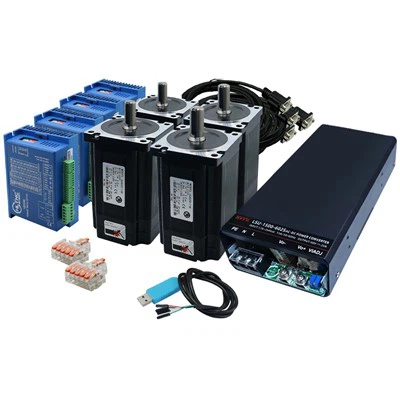
Linear guides don't work in isolation; they interact with other components in the machine. For example, if you're using a CNC Spindle MOTOR in conjunction with a linear guide, you need to make sure that the two components can work together without any interference.
The spindle motor might have its own space requirements, and you need to ensure that there's enough room for both the motor and the guide to operate properly. This might involve adjusting the position of the guide or the motor to avoid any conflicts.
Consideration for Future Expansion
When planning the installation space for your linear guide, it's also a good idea to think about future expansion. You might want to add more axes or upgrade your machine in the future, and having some extra space can make these changes easier.
For example, if you're currently using a single linear guide but might want to add a second one later, leaving some extra space in the frame can save you a lot of hassle down the road. You won't have to completely redesign your machine to accommodate the additional guide.
Measuring and Planning
Before you start installing your linear guide, it's essential to measure your available space accurately. Use a good quality measuring tape or caliper to get precise measurements. Draw a detailed plan of your machine's frame and mark the areas where the guide will be installed.
This plan will help you visualize the installation process and identify any potential issues in advance. You can also use it to communicate with your team or any contractors who might be helping with the installation.
Conclusion
So, there you have it! The installation space requirement for a linear guide depends on a variety of factors, including the guide's dimensions, clearance, mounting space, lubrication and maintenance needs, interaction with other components, and future expansion plans. By taking all these factors into account and planning carefully, you can ensure a successful installation and optimal performance of your linear guide.
If you're in the market for linear guides or have any questions about installation space requirements, don't hesitate to reach out. We're here to help you find the right solution for your needs. Whether you're a small workshop or a large manufacturing facility, we've got the expertise and products to support you.
References
- Industry standards for linear guide installation
- Manufacturer's manuals for TBR Support Rail, CNC Spindle MOTOR, and SBR Support Rail