SBR Support Rails are a crucial component in many industrial and mechanical applications, offering support and guidance for linear motion systems. One of the key questions that often arises in the selection and use of these rails is: What is the minimum temperature that SBR Support Rail can withstand? As a leading supplier of SBR Support Rails, I am well - versed in the technical aspects of these products and will delve into this important topic in this blog post.
Understanding SBR Support Rails
Before we discuss the minimum temperature tolerance, let's first understand what SBR Support Rails are. SBR Support Rails are typically used in conjunction with linear guide systems, providing a stable and smooth surface for the movement of sliders. They are made from high - quality materials, usually steel or aluminum, which are selected for their strength, durability, and corrosion resistance. These rails are designed to handle various loads and operating conditions, making them suitable for a wide range of industries, including automation, robotics, and machine tools.
The SBR Support Rail is engineered to offer precise linear motion, which is essential for the accurate operation of many mechanical systems. They are available in different sizes and configurations to meet the specific requirements of different applications. Whether it's a small - scale precision instrument or a large - scale industrial machinery, SBR Support Rails play a vital role in ensuring the proper functioning of the equipment.
Factors Affecting the Minimum Temperature Tolerance
Several factors determine the minimum temperature that an SBR Support Rail can withstand. These factors are mainly related to the material properties of the rail, the lubrication used, and the design of the linear motion system.
Material Properties
The material of the SBR Support Rail is a primary factor. For instance, steel rails have different temperature - related properties compared to aluminum rails. Steel is generally more resistant to low temperatures, as it has a relatively high melting point and good mechanical properties at cold temperatures. However, extreme cold can still cause steel to become brittle, especially if it contains certain impurities or has been heat - treated in a way that affects its microstructure.
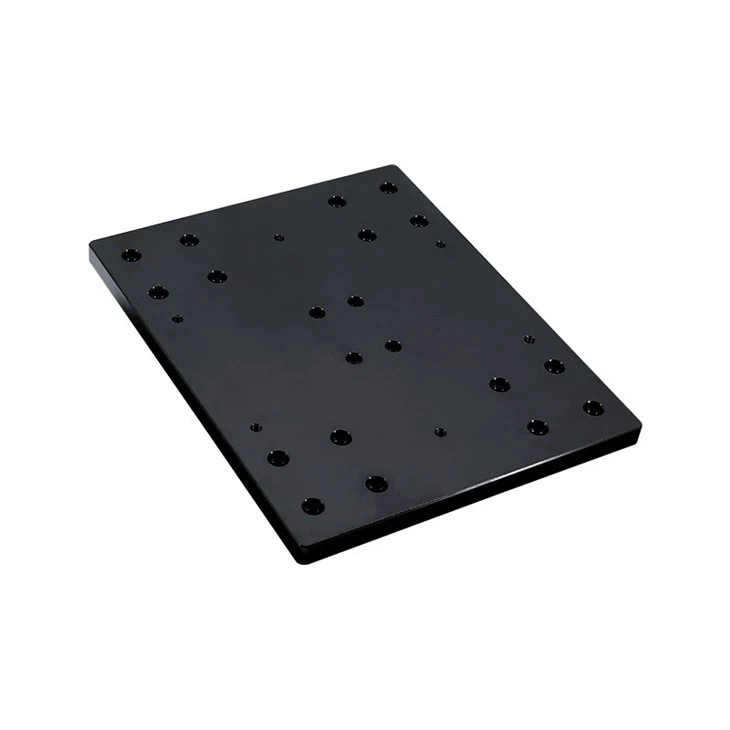
Aluminum, on the other hand, is a lighter material with good thermal conductivity. At low temperatures, aluminum can become stiffer, which may affect its ability to flex and absorb shocks. However, some aluminum alloys are specifically designed to maintain their ductility and strength at lower temperatures. Our Black Aluminium Plate used in some of our SBR Support Rails is engineered to perform well in a wide range of temperatures, including relatively low ones.
Lubrication
Lubrication is another critical factor. The lubricant used in the linear motion system can significantly impact the performance of the SBR Support Rail at low temperatures. Most standard lubricants can thicken or even solidify at extremely low temperatures, which can increase friction and reduce the smoothness of the linear motion. Special low - temperature lubricants are available that are formulated to maintain their fluidity and lubricating properties in cold environments. When selecting an SBR Support Rail for low - temperature applications, it is essential to choose a lubricant that is compatible with the expected temperature range.
System Design
The overall design of the linear motion system also affects the minimum temperature tolerance. Factors such as the pre - load applied to the rail, the clearances between the rail and the slider, and the presence of any additional protective enclosures can all influence how well the system performs in cold conditions. For example, a well - designed system with proper pre - load can help maintain the stability of the rail and slider assembly, even at low temperatures.
Determining the Minimum Temperature Tolerance
In general, most standard SBR Support Rails can withstand temperatures down to around - 20°C to - 30°C. However, this can vary depending on the specific product and its design. For more extreme low - temperature applications, custom - engineered SBR Support Rails may be required.
Our company has conducted extensive testing on our SBR Support Rails to determine their performance at different temperatures. We use advanced testing equipment and methods to simulate real - world operating conditions. Through these tests, we have been able to optimize the design and material selection of our rails to ensure reliable performance in a wide range of temperatures.
When considering an application where the temperature will be below the standard tolerance range, it is advisable to consult with our technical team. We can provide detailed information about the specific temperature capabilities of our products and recommend any necessary modifications or special features to ensure optimal performance.
Comparison with Other Linear Rail Systems
It is also interesting to compare the minimum temperature tolerance of SBR Support Rails with other types of linear rail systems, such as MGN Linear Rail. MGN Linear Rails are often used in more compact and precision - oriented applications.

Similar to SBR Support Rails, the minimum temperature tolerance of MGN Linear Rails is also affected by material, lubrication, and system design. However, due to their smaller size and different design features, they may have slightly different temperature - related performance characteristics. In general, both types of rails can be engineered to perform well in low - temperature environments, but the specific requirements of the application will determine which type is more suitable.
Applications in Low - Temperature Environments
SBR Support Rails are used in various applications where low - temperature conditions are encountered. Some examples include:
Cold Storage Facilities
In cold storage warehouses, where temperatures can be well below freezing, linear motion systems with SBR Support Rails are used for automated storage and retrieval systems. These systems require reliable and precise linear motion to ensure the efficient movement of goods. Our SBR Support Rails can be customized to withstand the cold temperatures in these environments, ensuring smooth operation and long - term durability.
Arctic and Antarctic Research
In scientific research stations located in the Arctic or Antarctic regions, where temperatures can reach extremely low levels, SBR Support Rails are used in various research equipment. These rails need to perform reliably in harsh cold conditions to support the accurate operation of instruments and machinery.
Aerospace Applications
In aerospace applications, components may be exposed to very low temperatures during flight or in space. SBR Support Rails used in aerospace equipment need to be able to withstand these extreme conditions while maintaining their performance and reliability.
Contact for Purchase and Consultation
If you are in need of SBR Support Rails for your application, especially if it involves low - temperature conditions, we are here to help. Our team of experts can provide you with detailed product information, technical support, and customized solutions. We understand the importance of selecting the right linear motion components for your specific needs, and we are committed to providing high - quality products and excellent customer service.
Don't hesitate to reach out to us to discuss your requirements. Whether you have questions about the minimum temperature tolerance, product specifications, or pricing, we are ready to assist you. Let's work together to ensure the success of your project.
References
- "Materials Science and Engineering: An Introduction" by William D. Callister Jr. and David G. Rethwisch.
- "Lubrication Fundamentals" by William G. Wills.
- Industry standards and guidelines related to linear motion systems and their performance in different environments.