What is the backlash of a ball screw?
As a seasoned ball screw supplier, I often encounter customers who are curious about the concept of backlash in ball screws. In this blog post, I will delve into the details of what backlash is, its implications, and how it affects the performance of ball screw systems.
Understanding Backlash in Ball Screws
Backlash in a ball screw refers to the amount of play or clearance between the ball nut and the screw shaft when the direction of motion is reversed. In other words, it is the distance the nut can move without causing an immediate movement of the screw or vice versa. This play occurs due to the manufacturing tolerances and the presence of a small gap between the balls and the raceways inside the ball nut.
When a ball screw is operating, the balls roll between the screw shaft and the nut, converting rotational motion into linear motion. However, because there is a small amount of clearance between the components, there is a slight delay or "lost motion" when the direction of the load changes. This lost motion is what we refer to as backlash.
Causes of Backlash
There are several factors that contribute to the presence of backlash in ball screws:
- Manufacturing Tolerances: During the manufacturing process, it is impossible to achieve perfect precision. There will always be some minor variations in the dimensions of the screw shaft, ball nut, and balls. These tolerances can result in a small amount of clearance between the components, leading to backlash.
- Wear and Tear: Over time, the repeated use of a ball screw can cause wear on the balls, raceways, and other components. As the surfaces wear down, the clearance between the parts increases, which in turn increases the backlash.
- Lubrication: Inadequate or improper lubrication can also contribute to backlash. Without sufficient lubrication, the balls may not roll smoothly, leading to increased friction and wear. This can cause the components to loosen up and increase the amount of play.
Implications of Backlash
Backlash can have several significant implications for the performance of a ball screw system:
- Positioning Accuracy: One of the most critical aspects of a ball screw system is its ability to provide precise positioning. Backlash can introduce errors in the positioning of the load, as there is a delay between the reversal of the input motion and the corresponding movement of the load. This can be particularly problematic in applications where high precision is required, such as in CNC machining, robotics, and semiconductor manufacturing.
- Repeatability: Repeatability refers to the ability of a system to reproduce the same motion accurately over multiple cycles. Backlash can affect the repeatability of a ball screw system by introducing variations in the position of the load from one cycle to the next. This can lead to inconsistent results and reduced quality in the final product.
- Dynamic Response: Backlash can also impact the dynamic response of a ball screw system. When the direction of the load changes, the presence of backlash can cause a sudden change in the force acting on the system. This can result in vibrations, noise, and reduced stability, which can affect the overall performance and lifespan of the system.
Measuring Backlash
To determine the amount of backlash in a ball screw, a measurement is typically taken using a dial indicator or a similar measuring device. The process involves applying a known load to the ball nut in one direction and then reversing the load and measuring the amount of movement of the nut before the screw starts to move. This measurement provides an indication of the backlash in the system.
Minimizing Backlash
As a ball screw supplier, we understand the importance of minimizing backlash to ensure the optimal performance of our products. There are several methods that can be used to reduce or eliminate backlash in ball screw systems:

- Preloading: Preloading involves applying a force to the ball nut to eliminate the clearance between the balls and the raceways. This can be achieved using various techniques, such as using a spring-loaded nut or a double nut arrangement. Preloading helps to improve the positioning accuracy and repeatability of the system by reducing the amount of lost motion.
- High-Precision Manufacturing: By using advanced manufacturing techniques and high-quality materials, we can minimize the manufacturing tolerances and reduce the amount of clearance between the components. This helps to reduce backlash and improve the overall performance of the ball screw.
- Proper Lubrication: Ensuring proper lubrication of the ball screw is essential for reducing friction and wear. Using the right type of lubricant and applying it at the correct intervals can help to maintain the smooth operation of the system and minimize backlash.
- Regular Maintenance: Regular maintenance, including inspection, cleaning, and lubrication, is crucial for keeping a ball screw system in good condition. By detecting and addressing any issues early on, we can prevent excessive wear and damage, which can lead to increased backlash.
Different Types of Ball Screws and Backlash
At our company, we offer a wide range of ball screws, including SFU Ball Screw, DFU Ball Screw, and SFE Ball Screw. Each type of ball screw has its own characteristics and is suitable for different applications.
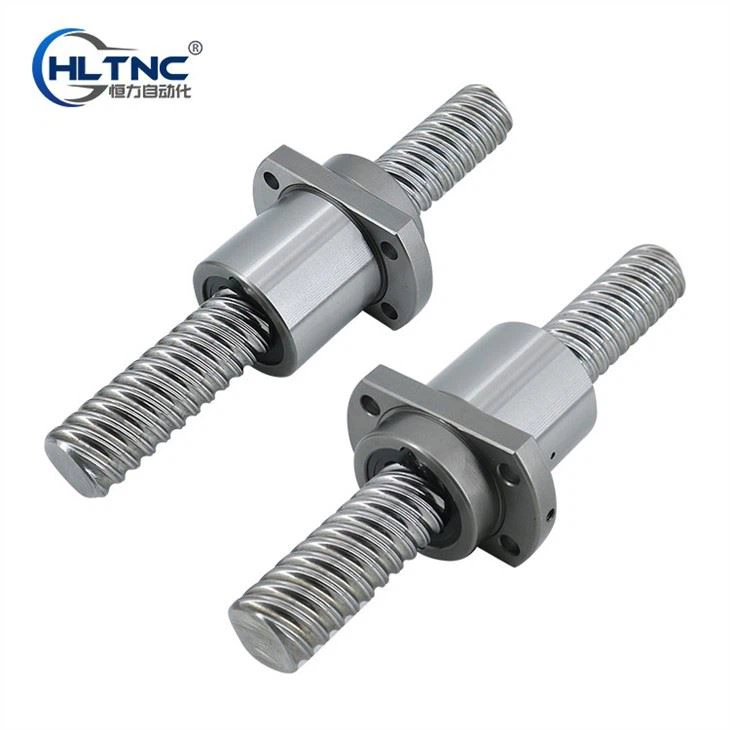
- SFU Ball Screw: This type of ball screw is commonly used in general-purpose applications where moderate precision and load capacity are required. It has a relatively simple design and is cost-effective. However, it may have a slightly higher backlash compared to some other types of ball screws.
- DFU Ball Screw: The DFU ball screw is designed for applications that require high precision and high load capacity. It has a more complex design and is often used in industrial machinery, automation systems, and other demanding applications. With proper preloading and manufacturing techniques, the backlash of a DFU ball screw can be minimized to a very low level.
- SFE Ball Screw: The SFE ball screw is a high-performance ball screw that offers excellent precision, high speed, and low noise. It is suitable for applications where extreme accuracy and reliability are required, such as in semiconductor manufacturing and medical equipment. By using advanced technology and materials, the SFE ball screw can achieve very low backlash and superior performance.
Conclusion
In conclusion, backlash is an important consideration when selecting and using a ball screw system. It can have a significant impact on the positioning accuracy, repeatability, and dynamic response of the system. As a ball screw supplier, we are committed to providing our customers with high-quality products that minimize backlash and deliver optimal performance.
If you are in the market for a ball screw and have any questions about backlash or other aspects of ball screw performance, please do not hesitate to contact us. Our team of experts is always ready to assist you in selecting the right ball screw for your application and providing you with the support you need to ensure its successful operation. We look forward to the opportunity to work with you and help you achieve your goals.
References
- "Ball Screws: Design, Selection, and Application" by Robert J. Schmitz
- "Mechanical Design Handbook" by Myer Kutz