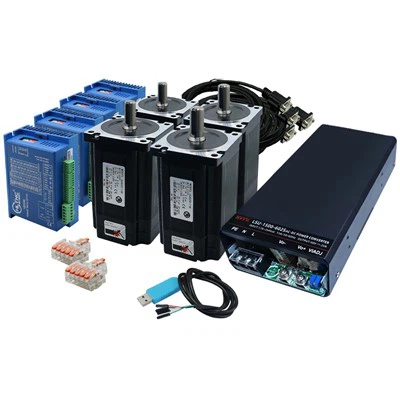
In the dynamic world of industrial automation and robotics, motor drivers play a pivotal role in controlling the operation of motors. As a leading supplier of motors and drivers, I often encounter customers who are confused about the differences between high - voltage and low - voltage motor drivers. In this blog post, I'll delve into the key distinctions, their respective applications, and how to choose the right one for your specific needs.
Voltage Ratings and Their Significance
The most obvious difference between high - voltage and low - voltage motor drivers lies in their voltage ratings. Low - voltage motor drivers typically operate in the range of 12V to 48V, while high - voltage motor drivers can handle voltages from 100V up to several hundred volts.
The voltage rating is crucial as it directly impacts the power output of the motor. According to the power formula (P = VI) (where (P) is power, (V) is voltage, and (I) is current), for a given current, a higher voltage will result in a higher power output. This means that high - voltage motor drivers can deliver more power to the motor, enabling it to drive heavier loads or operate at higher speeds.
Power and Torque Output
High - voltage motor drivers are capable of providing significantly more power and torque compared to their low - voltage counterparts. This is particularly important in applications where large forces or high - speed operation are required. For example, in industrial manufacturing, high - voltage motor drivers are commonly used to power conveyor belts, large robotic arms, and heavy - duty machinery. These drivers can handle the high - power demands of these applications, ensuring smooth and efficient operation.
On the other hand, low - voltage motor drivers are more suitable for applications where power requirements are relatively low. They are often used in small - scale automation projects, consumer electronics, and educational robots. For instance, a small 3D printer or a desktop robotic arm can be effectively powered by a low - voltage motor driver, as they do not require a large amount of power to operate.
Efficiency and Heat Dissipation
Another important difference between high - voltage and low - voltage motor drivers is their efficiency and heat dissipation characteristics. High - voltage motor drivers generally have higher efficiency, especially when operating at high loads. This is because, for a given power output, a higher voltage allows for a lower current. Since the power loss in a circuit is proportional to the square of the current ((P_{loss}=I^{2}R), where (R) is the resistance of the circuit), a lower current results in less power loss and higher efficiency.
However, high - voltage motor drivers also generate more heat due to the higher power they handle. Effective heat dissipation is crucial to ensure the reliability and longevity of these drivers. Specialized heat sinks, fans, or liquid cooling systems are often required to keep the temperature of high - voltage motor drivers within a safe operating range.
Low - voltage motor drivers, on the other hand, generate less heat because they operate at lower power levels. They can often rely on natural convection or simple heat sinks for heat dissipation, which simplifies the design and reduces the cost of the overall system.
Safety Considerations
Safety is a major concern when dealing with high - voltage motor drivers. The high voltages involved pose a significant risk of electric shock, which can be fatal. Therefore, strict safety measures must be implemented when installing and operating high - voltage motor drivers. This includes using proper insulation, grounding, and protective enclosures. Additionally, operators must be trained to handle high - voltage equipment safely.
Low - voltage motor drivers are generally considered safer to use because the risk of electric shock is significantly reduced. However, basic safety precautions such as proper wiring and insulation are still necessary to prevent short circuits and other electrical hazards.
Cost and Complexity
High - voltage motor drivers are typically more expensive than low - voltage motor drivers. This is due to the more complex circuitry required to handle high voltages, as well as the additional safety features and heat dissipation components. The installation and maintenance of high - voltage systems also require specialized skills and equipment, which further adds to the cost.
Low - voltage motor drivers, on the other hand, are more affordable and easier to install and maintain. They are a popular choice for small - scale projects and hobbyists who are looking for a cost - effective solution.
Applications
The choice between a high - voltage and a low - voltage motor driver depends largely on the specific application. Here are some common applications for each type:
High - Voltage Motor Drivers
- Industrial Automation: In factories, high - voltage motor drivers are used to power large - scale machinery such as CNC machines, presses, and injection molding machines. These machines require high power and torque to operate efficiently.
- Renewable Energy Systems: High - voltage motor drivers are used in wind turbines and solar tracking systems to convert mechanical energy into electrical energy or to adjust the position of solar panels for maximum sunlight exposure.
- Electric Vehicles: The motors in electric cars, buses, and trucks are typically powered by high - voltage motor drivers to provide the necessary power for acceleration and high - speed operation.
Low - Voltage Motor Drivers
- Consumer Electronics: Low - voltage motor drivers are used in a wide range of consumer products, such as DVD players, hard disk drives, and drones. These products require small, efficient motors to operate.
- Educational Robots: Low - voltage motor drivers are ideal for educational purposes, as they are easy to use and relatively inexpensive. They allow students to learn about robotics and automation without the need for complex and expensive equipment.
- Home Automation: In smart homes, low - voltage motor drivers are used to control various devices, such as blinds, curtains, and door locks. These devices require low - power motors to operate quietly and efficiently.
Our Product Offerings
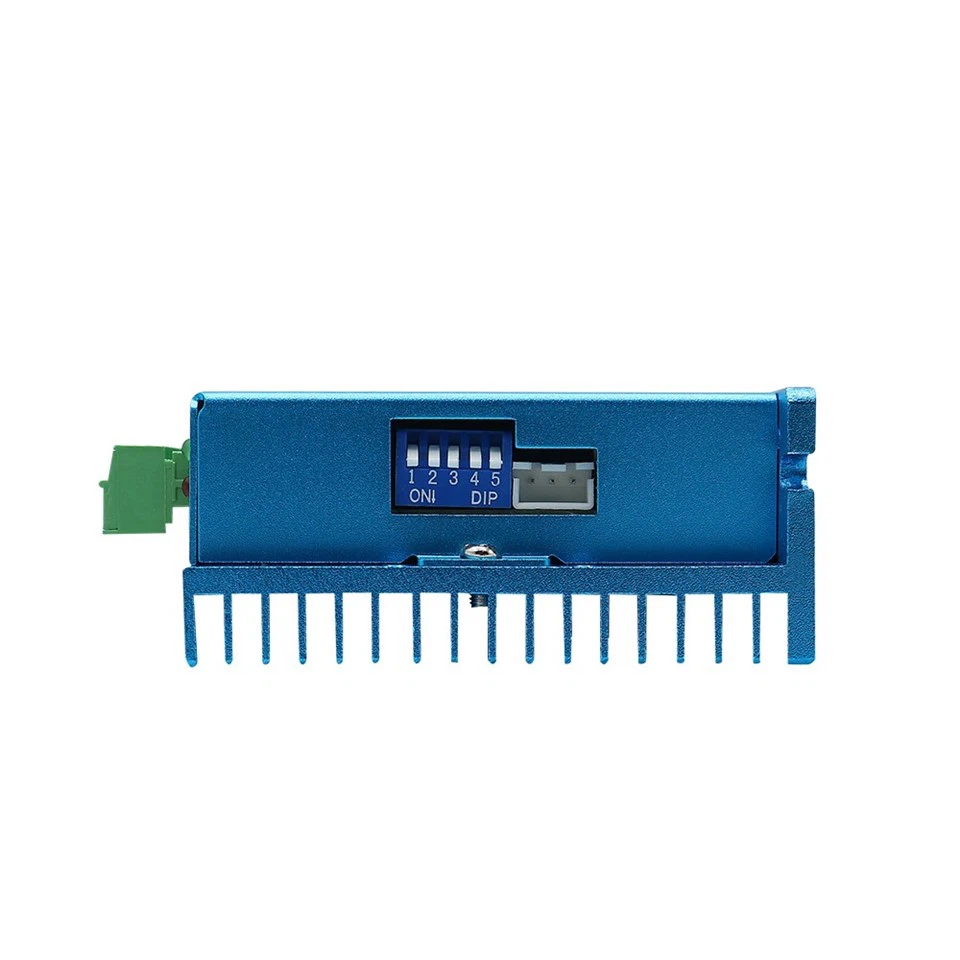
As a Motor and Driver supplier, we offer a wide range of high - voltage and low - voltage motor drivers to meet the diverse needs of our customers. Our Integrated Driven Motor is a high - performance solution that combines a motor and a driver into a single unit, providing a compact and efficient solution for various applications. Our HBS57 Stepper Driver is a popular choice for low - voltage applications, offering precise control and high reliability. We also provide Stepper Motor Bracket to help you install and mount your motors securely.

Conclusion
In conclusion, the choice between a high - voltage and a low - voltage motor driver depends on several factors, including power requirements, torque output, efficiency, safety, cost, and the specific application. High - voltage motor drivers are suitable for applications that require high power and torque, while low - voltage motor drivers are more appropriate for low - power applications.
If you're still unsure which motor driver is right for your project, our team of experts is here to help. We can provide you with detailed technical advice and help you select the best solution for your needs. Contact us today to start the procurement discussion and take your project to the next level.
References
- Johnson, M. (2018). Motor Driver Handbook. New York: Industrial Press Inc.
- Smith, A. (2020). Understanding Electric Motors and Drivers. London: Elsevier.