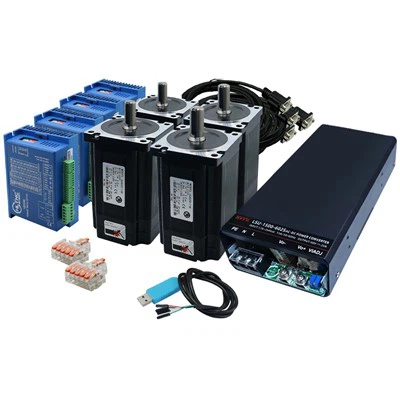
Hey there! As a supplier of CNC ATC Spindles, I often get asked about the difference between a regular spindle and a CNC ATC (Automatic Tool Changer) Spindle. So, I thought I'd break it down for you in this blog post.
Let's start with the basics. A spindle, in the context of machining, is a crucial component that holds and rotates the cutting tool. It's like the heart of a machining operation, determining the speed, power, and precision of the cutting process.
Regular Spindles
A regular spindle, also known as a manual spindle, is the more traditional type. It's been around for ages and is still widely used in many machining operations.
Operation:
One of the most significant features of a regular spindle is its manual nature. You have to change the cutting tools by hand. This might sound like a hassle, but in some cases, it's actually quite practical. For example, if you're working on a small - scale project or making occasional adjustments, manual tool changing allows for more hands - on control.
Speed and Precision:
Regular spindles generally have a fixed or limited range of speeds. They are often designed for a specific type of machining and can't adapt to a wide variety of tasks as easily as their CNC counterparts. In terms of precision, while they can achieve decent accuracy, they rely more on the skill of the operator to ensure consistent results. For instance, when you're milling a simple flat surface, a regular spindle can do the job, but getting highly accurate and repeatable results might be a bit of a challenge.
Cost:
Cost is another factor where regular spindles shine. They are usually more affordable to purchase and maintain. Since they have fewer complex components, there are fewer parts that can break down, and repairs are often less complicated and less expensive. This makes them a great choice for small workshops or hobbyists on a budget.
CNC ATC Spindles
Now, let's talk about the star of the show - CNC ATC Spindles. These are the high - tech powerhouses of modern machining.
Operation:
The most obvious difference between a regular spindle and a CNC ATC Spindle is the automatic tool - changing feature. With a CNC ATC Spindle, the machine can automatically select and change different cutting tools based on the pre - programmed instructions. This is a game - changer in terms of efficiency. For example, in a complex machining job that requires multiple tools, a CNC ATC Spindle can switch between tools in a matter of seconds, eliminating the time - consuming manual tool - changing process.
Speed and Precision:
CNC ATC Spindles offer a much wider range of speeds and can be precisely controlled. The speed can be adjusted on - the - fly during the machining process, which is incredibly useful for different types of materials and cutting operations. In terms of precision, these spindles are designed to achieve extremely high levels of accuracy. They use advanced control systems and sensors to ensure that each cut is made with pinpoint precision, resulting in consistent and high - quality finished products. Whether you're machining a complex 3D part or a high - tolerance component, a CNC ATC Spindle can handle it with ease.
Versatility:
These spindles are highly versatile. They can be used for a variety of machining operations such as milling, drilling, and tapping. You can program the machine to perform different tasks in a sequence, making it suitable for both small - batch and large - scale production. For example, in an automotive manufacturing plant, a CNC ATC Spindle can be used to machine engine components with different cutting tools, all in one automated process.
Additional Components and Their Roles
When it comes to CNC ATC Spindles, there are some additional components that work together to ensure smooth operation.
CNC Spindle MOTOR
A CNC Spindle MOTOR is a critical part of the setup. It provides the power to rotate the spindle at the desired speed. These motors are designed to be highly efficient and reliable, with variable speed control options. They can handle heavy - duty machining tasks and are built to last, ensuring that your CNC ATC Spindle operates at its best.
Three Phase Soft Starter
The Three Phase Soft Starter plays an important role in protecting the motor and extending its lifespan. It gradually increases the voltage to the motor during startup, reducing the inrush current and mechanical stress. This not only protects the motor but also helps to improve the overall efficiency of the system.


3D Touch Probe
A 3D Touch Probe is a handy device that can be used in conjunction with a CNC ATC Spindle. It allows for precise measurement and alignment of the workpiece. By using the 3D touch probe, you can ensure that the workpiece is positioned correctly, which is crucial for achieving accurate machining results.
Why Choose a CNC ATC Spindle?
If you're still on the fence about whether to choose a regular spindle or a CNC ATC Spindle, here are some reasons why the latter might be a better option for you:
- Increased Productivity: The automatic tool - changing feature significantly reduces downtime between tool changes, allowing you to complete more jobs in less time.
- Higher Precision: For industries where precision is key, such as aerospace and medical device manufacturing, a CNC ATC Spindle can provide the accuracy you need.
- Versatility: If you need to perform a variety of machining operations on different materials, a CNC ATC Spindle can adapt to your changing needs.
- Better Quality Control: With precise control over the cutting process, you can ensure that each part produced meets the highest quality standards.
Contact Us for Your CNC ATC Spindle Needs
If you're interested in learning more about our CNC ATC Spindles or are ready to make a purchase, don't hesitate to reach out. We have a team of experts who can answer all your questions and help you find the perfect spindle for your specific requirements. Whether you're a small business looking to upgrade your machining capabilities or a large - scale manufacturer in need of high - performance equipment, we've got you covered.
References
- "Machining Technology Handbook"
- "CNC Machining Basics"