Hey there! As a supplier of DFU Ball Screw, I often get asked about the difference between single - start and multi - start DFU Ball Screw. So, I thought I'd write this blog to break it all down for you.
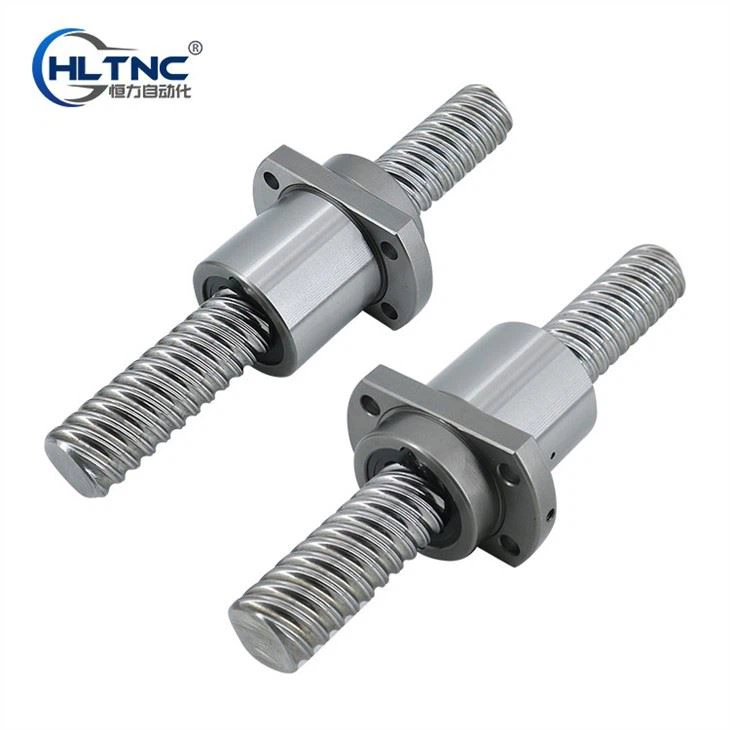
First off, let's understand what a DFU Ball Screw is. A DFU Ball Screw is a high - precision mechanical component used in various industrial applications. You can learn more about it on our website here: DFU Ball Screw. It converts rotational motion into linear motion with high efficiency and accuracy. But when it comes to choosing between single - start and multi - start, things can get a bit tricky.
Single - Start DFU Ball Screw
Let's start with the single - start DFU Ball Screw. In a single - start ball screw, there's only one continuous helix or thread running along the screw shaft. It's like a single path that the ball bearings follow as the screw rotates.
One of the main advantages of a single - start DFU Ball Screw is its simplicity. It's easier to manufacture compared to multi - start ones. This simplicity also means that it's generally more cost - effective. If you're on a tight budget or your application doesn't require extremely high linear speed, a single - start ball screw might be the way to go.

The lead of a single - start ball screw is equal to its pitch. The lead is the distance the nut moves along the screw shaft in one complete rotation of the screw. Since there's only one thread, the movement is relatively straightforward. For example, if the pitch of the single - start ball screw is 5mm, the lead will also be 5mm. So, for every full turn of the screw, the nut will move 5mm linearly.
Single - start ball screws are great for applications where precision positioning is crucial. Because of the single thread, there's less chance of the ball bearings getting misaligned or causing vibrations. They're commonly used in applications like 3D printers, small CNC machines, and some types of automated assembly lines where the load is relatively light and the speed requirements aren't too high.
Multi - Start DFU Ball Screw
Now, let's talk about multi - start DFU Ball Screws. In a multi - start ball screw, there are multiple helical threads running along the screw shaft. It's like having several parallel paths for the ball bearings to travel on.
The biggest advantage of a multi - start ball screw is its high linear speed. Since there are multiple threads, the lead of a multi - start ball screw is much greater than its pitch. For instance, if you have a double - start ball screw with a pitch of 5mm, the lead will be 10mm. This means that for every full rotation of the screw, the nut will move 10mm linearly, which is twice as fast as a single - start ball screw with the same pitch.
Multi - start ball screws are ideal for applications that require high - speed linear motion. They're often used in large - scale CNC machines, high - speed robotics, and some types of packaging machinery. These applications need to move parts quickly from one point to another, and the multi - start ball screw can deliver the speed needed.
However, multi - start ball screws are more complex to manufacture. The multiple threads need to be precisely machined to ensure smooth operation. This complexity also makes them more expensive than single - start ball screws. Additionally, because of the higher lead, they might not be as precise in positioning as single - start ball screws. The increased speed can sometimes lead to more vibrations and less accurate stopping points.
Performance Comparison
When it comes to performance, the differences between single - start and multi - start DFU Ball Screws are quite significant.
Load Capacity: Single - start ball screws usually have a relatively lower load capacity compared to multi - start ones. The single thread distributes the load over a smaller area, which means it can handle less weight. Multi - start ball screws, with their multiple threads, can distribute the load more evenly and handle heavier loads.
Efficiency: Both single - start and multi - start ball screws are highly efficient in converting rotational motion to linear motion. However, multi - start ball screws can sometimes have slightly lower efficiency due to the increased friction caused by the multiple threads. But in high - speed applications, the gain in speed often outweighs this small loss in efficiency.
Accuracy: As mentioned earlier, single - start ball screws are generally more accurate in positioning. The single thread allows for more precise control of the nut's movement. Multi - start ball screws, while still accurate, might have a bit more variation in their positioning due to the higher lead and the complexity of the multiple threads.
Applications in Different Industries
Let's take a look at how these two types of ball screws are used in different industries.
In the automotive industry, single - start DFU Ball Screws are often used in small - scale assembly processes. For example, in the installation of small components like sensors or switches. They provide the precision needed for these delicate operations. On the other hand, multi - start ball screws are used in large - scale production lines, such as the movement of car body parts on conveyor systems. The high speed of multi - start ball screws helps to increase the overall production efficiency.
In the aerospace industry, single - start ball screws are used in applications where space is limited and precision is critical, like in the control systems of small aircraft components. Multi - start ball screws are used in larger aircraft systems, such as the movement of landing gear or wing flaps, where high - speed actuation is required.
Choosing the Right One for Your Application
So, how do you decide whether to choose a single - start or multi - start DFU Ball Screw for your application?
First, consider your speed requirements. If you need high - speed linear motion, a multi - start ball screw is probably the better choice. But if precision positioning is your top priority and speed isn't as crucial, a single - start ball screw might be more suitable.
Next, think about your load capacity. If you're dealing with heavy loads, a multi - start ball screw can handle it better. However, if the load is relatively light, a single - start ball screw can do the job just fine.
Cost is also an important factor. If you're on a tight budget, a single - start ball screw is the more economical option. But if the performance benefits of a multi - start ball screw justify the higher cost for your application, then it's worth the investment.
We also offer other types of ball screws like SFU Ball Screw and SFE Ball Screw which might be suitable for different applications.
If you're still not sure which type of DFU Ball Screw is right for you, don't hesitate to reach out. We're here to help you make the best decision for your specific needs. Whether you're a small business owner looking for a cost - effective solution or a large - scale manufacturer in need of high - performance components, we've got you covered.
In conclusion, both single - start and multi - start DFU Ball Screws have their own unique advantages and disadvantages. By understanding these differences, you can choose the one that will work best for your application. So, if you're in the market for a DFU Ball Screw, give us a call and let's start a conversation about your requirements. We're confident that we can provide you with the perfect solution.
References
- "Ball Screw Handbook" by Thomson Industries
- "Mechanical Design Handbook" by Robert C. Juvinall and Kurt M. Marshek