As a seasoned ball screw supplier, I've witnessed firsthand the critical role that proper lubrication plays in the performance and longevity of these precision components. In this blog, I'll delve into the lubrication requirements for ball screws, exploring the types of lubricants, application methods, and factors to consider for optimal operation.
Why Lubrication is Essential for Ball Screws
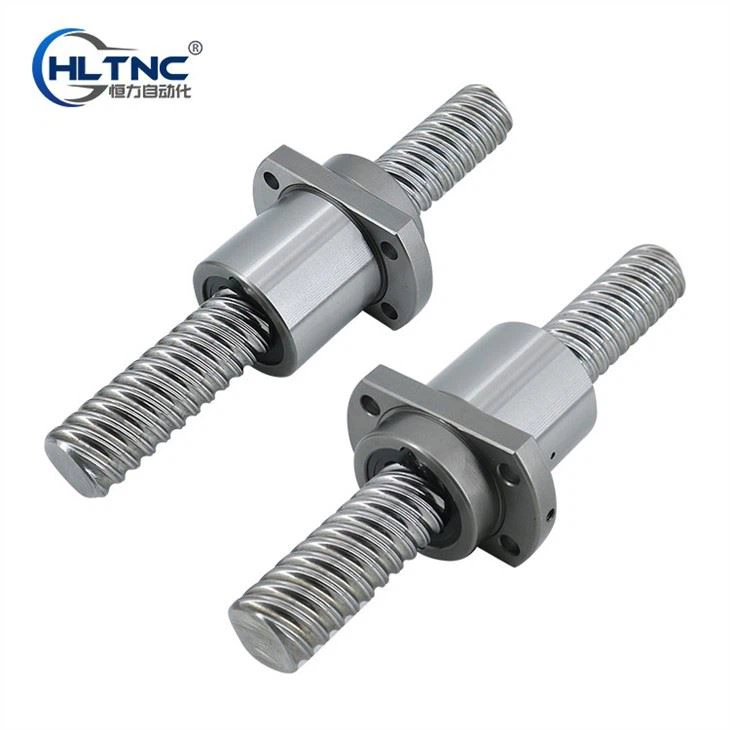
Ball screws are mechanical devices that convert rotational motion into linear motion with high efficiency and precision. They consist of a screw shaft, a nut, and a series of balls that roll between the two. During operation, the balls experience significant contact stress and friction, which can lead to wear, heat generation, and reduced performance if not properly lubricated.
Lubrication serves several important functions in a ball screw system:
- Reduces Friction: By forming a thin film between the contacting surfaces, lubricants minimize friction and wear, allowing the balls to roll smoothly and efficiently.
- Dissipates Heat: Lubricants help to dissipate the heat generated during operation, preventing overheating and thermal expansion, which can affect the accuracy and performance of the ball screw.
- Prevents Corrosion: A good lubricant provides a protective barrier against moisture and contaminants, preventing corrosion and rust formation on the screw shaft and nut.
- Improves Efficiency: Reduced friction and wear result in improved mechanical efficiency, allowing the ball screw to operate with less power consumption and lower noise levels.
Types of Lubricants for Ball Screws
There are several types of lubricants available for ball screws, each with its own unique properties and characteristics. The choice of lubricant depends on various factors, such as the operating conditions, load requirements, and environmental factors. Here are some common types of lubricants used for ball screws:
Greases
Greases are a popular choice for ball screw lubrication due to their excellent adhesion, sealing properties, and long service life. They consist of a base oil, a thickening agent, and additives that enhance their performance. Greases are available in different viscosities and formulations to suit various operating conditions.
- Advantages:
- Good adhesion: Greases adhere well to the surfaces of the ball screw, providing continuous lubrication even under high loads and speeds.
- Sealing properties: They help to seal out contaminants and prevent moisture from entering the ball screw system.
- Long service life: Greases typically have a longer service life compared to oils, reducing the frequency of lubrication maintenance.
- Disadvantages:
- Higher friction: Greases generally have a higher coefficient of friction compared to oils, which can result in slightly lower efficiency.
- Limited heat dissipation: They have lower heat dissipation capabilities compared to oils, which can be a concern in high-speed or high-temperature applications.
Oils
Oils are another option for ball screw lubrication, especially in applications where high-speed operation and efficient heat dissipation are required. They have a lower viscosity compared to greases, allowing for smoother operation and better heat transfer.
- Advantages:
- Low friction: Oils have a lower coefficient of friction compared to greases, resulting in higher efficiency and reduced power consumption.
- Good heat dissipation: They can effectively dissipate heat generated during operation, making them suitable for high-speed and high-temperature applications.
- Easy application: Oils can be easily applied using various methods, such as oil bath, splash lubrication, or oil mist lubrication.
- Disadvantages:
- Poor adhesion: Oils tend to have poor adhesion to the surfaces of the ball screw, requiring more frequent lubrication to maintain adequate lubrication levels.
- Sealing issues: They do not provide the same level of sealing protection as greases, making them more susceptible to contamination and moisture ingress.
Solid Lubricants
Solid lubricants, such as graphite and molybdenum disulfide (MoS2), are sometimes used in ball screw applications where traditional lubricants are not suitable. These lubricants are typically in the form of powders or coatings and can provide lubrication under extreme conditions, such as high temperatures, high pressures, or in the presence of corrosive environments.
- Advantages:
- High temperature resistance: Solid lubricants can withstand high temperatures without losing their lubricating properties, making them suitable for applications where traditional lubricants would degrade.
- Corrosion resistance: They provide a protective barrier against corrosion and wear, even in harsh environments.
- Low friction: Solid lubricants can reduce friction and wear, improving the efficiency and performance of the ball screw.
- Disadvantages:
- Limited application methods: Solid lubricants are typically applied as coatings or powders, which can be more difficult to apply compared to greases or oils.
- Reduced lubrication effectiveness: They may not provide the same level of lubrication as traditional lubricants, especially in high-speed or high-load applications.
Application Methods for Ball Screw Lubrication
The proper application of lubricant is crucial to ensure effective lubrication and optimal performance of the ball screw. There are several methods available for applying lubricant to ball screws, each with its own advantages and disadvantages. Here are some common application methods:
Manual Lubrication
Manual lubrication involves applying lubricant to the ball screw using a brush, syringe, or grease gun. This method is simple and cost-effective, but it requires regular maintenance and may not provide consistent lubrication levels.
- Advantages:
- Simple and cost-effective: Manual lubrication does not require any special equipment, making it a convenient option for small-scale applications or occasional lubrication.
- Flexibility: It allows for precise application of lubricant to specific areas of the ball screw.
- Disadvantages:
- Inconsistent lubrication: Manual lubrication can result in inconsistent lubrication levels, especially if the operator does not follow a regular maintenance schedule.
- Labor-intensive: It requires frequent manual intervention, which can be time-consuming and labor-intensive.
Automatic Lubrication Systems
Automatic lubrication systems are designed to provide continuous and consistent lubrication to the ball screw without the need for manual intervention. These systems can be programmed to deliver a specific amount of lubricant at regular intervals, ensuring optimal lubrication levels and reducing the risk of over-lubrication or under-lubrication.

- Advantages:
- Consistent lubrication: Automatic lubrication systems provide a consistent supply of lubricant, ensuring optimal lubrication levels and reducing the risk of wear and damage.
- Reduced maintenance: They eliminate the need for manual lubrication, reducing labor costs and maintenance requirements.
- Improved reliability: By ensuring proper lubrication, automatic lubrication systems can improve the reliability and longevity of the ball screw.
- Disadvantages:
- Higher cost: Automatic lubrication systems can be more expensive to purchase and install compared to manual lubrication methods.
- Complexity: They require more complex installation and setup, and may require periodic maintenance and calibration.
Factors to Consider for Optimal Ball Screw Lubrication
In addition to choosing the right type of lubricant and application method, there are several other factors to consider for optimal ball screw lubrication:
Operating Conditions
The operating conditions, such as speed, load, temperature, and humidity, can have a significant impact on the lubrication requirements of the ball screw. For example, high-speed applications may require a lubricant with low viscosity and good heat dissipation properties, while high-load applications may require a lubricant with high load-carrying capacity.
Environmental Factors
The environmental factors, such as dust, dirt, moisture, and chemicals, can also affect the lubrication performance of the ball screw. In harsh environments, it may be necessary to use a lubricant with good sealing properties and corrosion resistance to protect the ball screw from contamination and damage.
Maintenance Schedule
Regular maintenance is essential to ensure proper lubrication and optimal performance of the ball screw. The maintenance schedule should include periodic inspection, cleaning, and lubrication of the ball screw, as well as replacement of the lubricant at recommended intervals.
Compatibility
It is important to ensure that the lubricant is compatible with the materials used in the ball screw system, such as the screw shaft, nut, and balls. Incompatible lubricants can cause chemical reactions, which can lead to corrosion, wear, and reduced performance.
Our Ball Screw Products and Lubrication Support
At our company, we offer a wide range of high-quality ball screws, including SFE Ball Screw, SFU Ball Screw, and DFU Ball Screw. Our ball screws are designed and manufactured to meet the highest standards of quality and performance, and we provide comprehensive lubrication support to ensure optimal operation.
We can help you choose the right lubricant and application method for your specific application, based on your operating conditions, load requirements, and environmental factors. Our team of experts can also provide training and technical support to ensure that you are using the lubricant correctly and maintaining your ball screw system properly.
If you are interested in learning more about our ball screw products or need assistance with lubrication, please feel free to contact us. We would be happy to discuss your requirements and provide you with a customized solution.
Conclusion
Proper lubrication is essential for the performance and longevity of ball screws. By choosing the right type of lubricant, applying it correctly, and considering the operating conditions and environmental factors, you can ensure optimal lubrication and minimize the risk of wear, damage, and premature failure.
As a ball screw supplier, we are committed to providing our customers with high-quality products and comprehensive lubrication support. If you have any questions or need further information, please do not hesitate to contact us. We look forward to working with you to meet your ball screw needs.
References
- "Ball Screw Handbook," published by Thomson Industries, Inc.
- "Lubrication Fundamentals," published by SKF Group.
- "Mechanical Design Handbook," edited by Myer Kutz.